
Utility Locating
Public and private lines marked before the wheel turns. Grinding blind beside a gas or irrigation line is not a risk worth taking.
A stump left behind is more than an eyesore. It sprouts, it attracts carpenter ants and termites, it wrecks mower blades, and it quietly turns a patch of lawn into somewhere nobody walks.
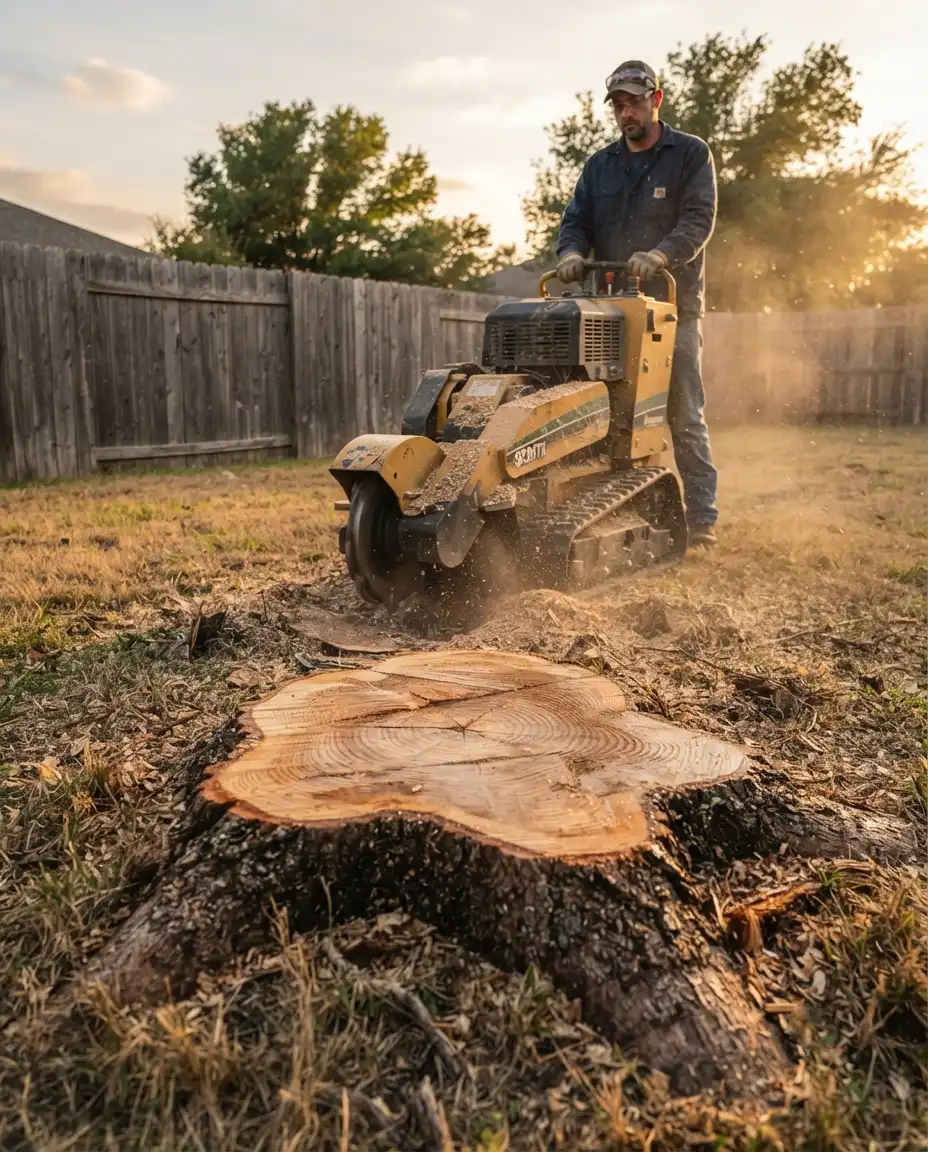
Grinding removes the visible stump and the flare of surface roots around it, reducing the wood to chips well below the surface so the ground can be used again. It is faster, cheaper, and far less disruptive than excavating the whole root plate.
How deep we grind depends on what comes next. Six inches is enough to lay sod over; replanting or paving in the same spot needs considerably more. Tell us your plans at the estimate and we will set the depth to match, then backfill with the grindings or haul them away and top up with clean soil — whichever suits you.
Several stumps on the same visit are priced as one job. If you have more than one, it is almost always cheaper to do them together.
Public and private lines marked before the wheel turns. Grinding blind beside a gas or irrigation line is not a risk worth taking.
The stump taken six to twelve inches under the surface, and deeper wherever you plan to replant or pave.
Radiating roots that lift turf and catch mower decks ground out alongside the stump itself.
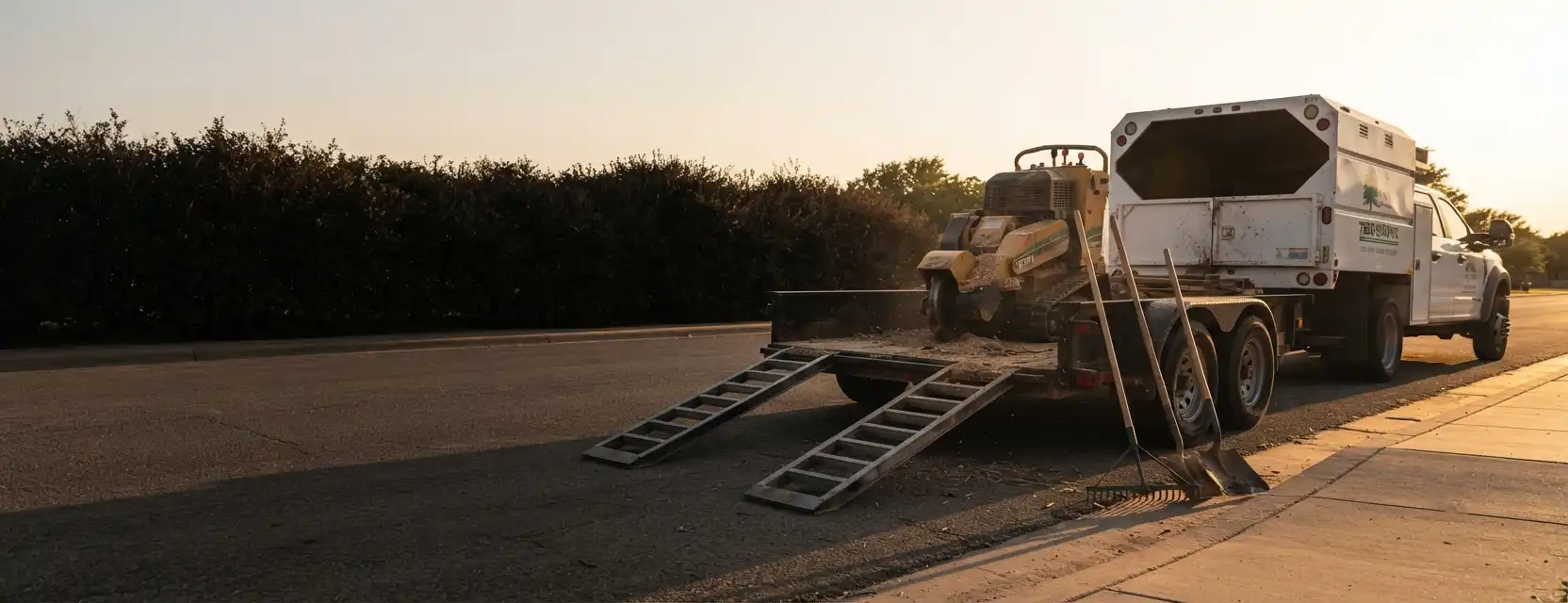
Compact grinders that fit through a standard 36-inch gate reach back gardens without dismantling your fence.
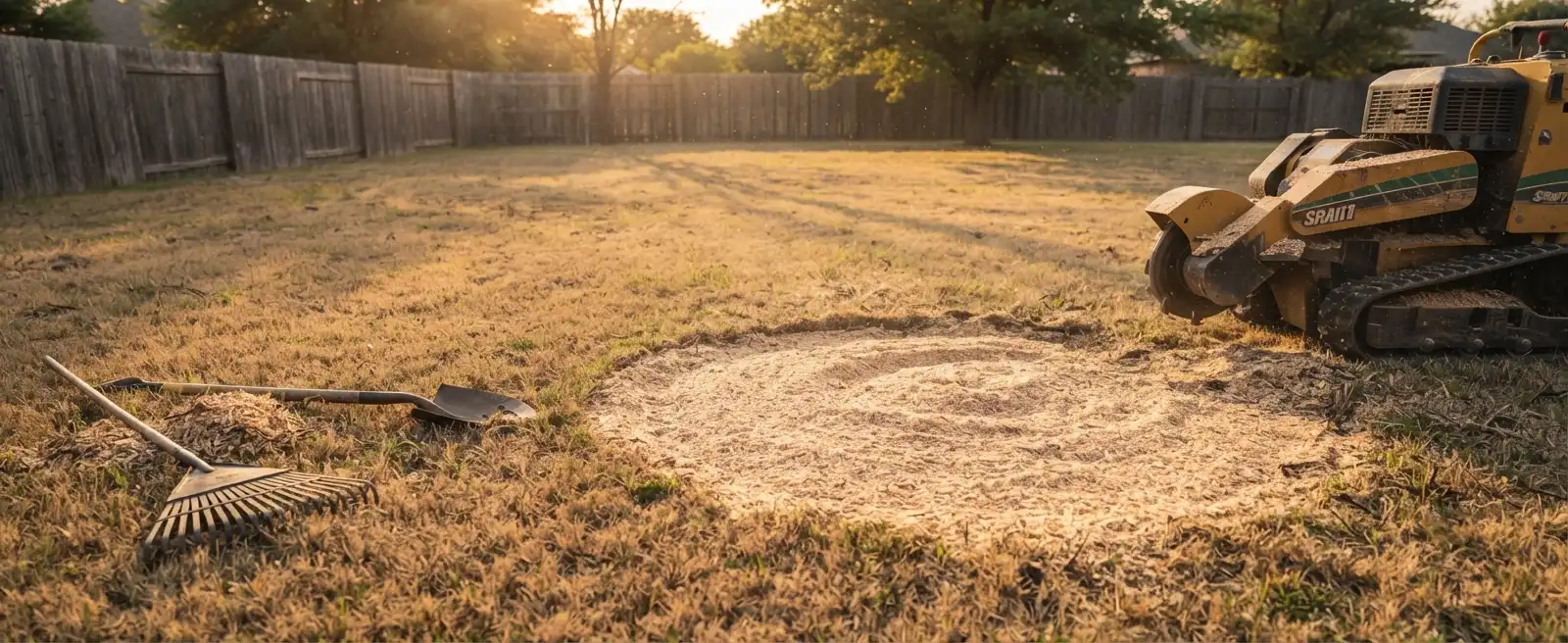
Grindings returned and levelled, or removed entirely and replaced with clean topsoil ready for seed.
Several stumps in one visit priced as a single job — considerably cheaper than booking them separately.
We set the grinding depth to what comes next — sod, seed, paving, or a replacement tree.
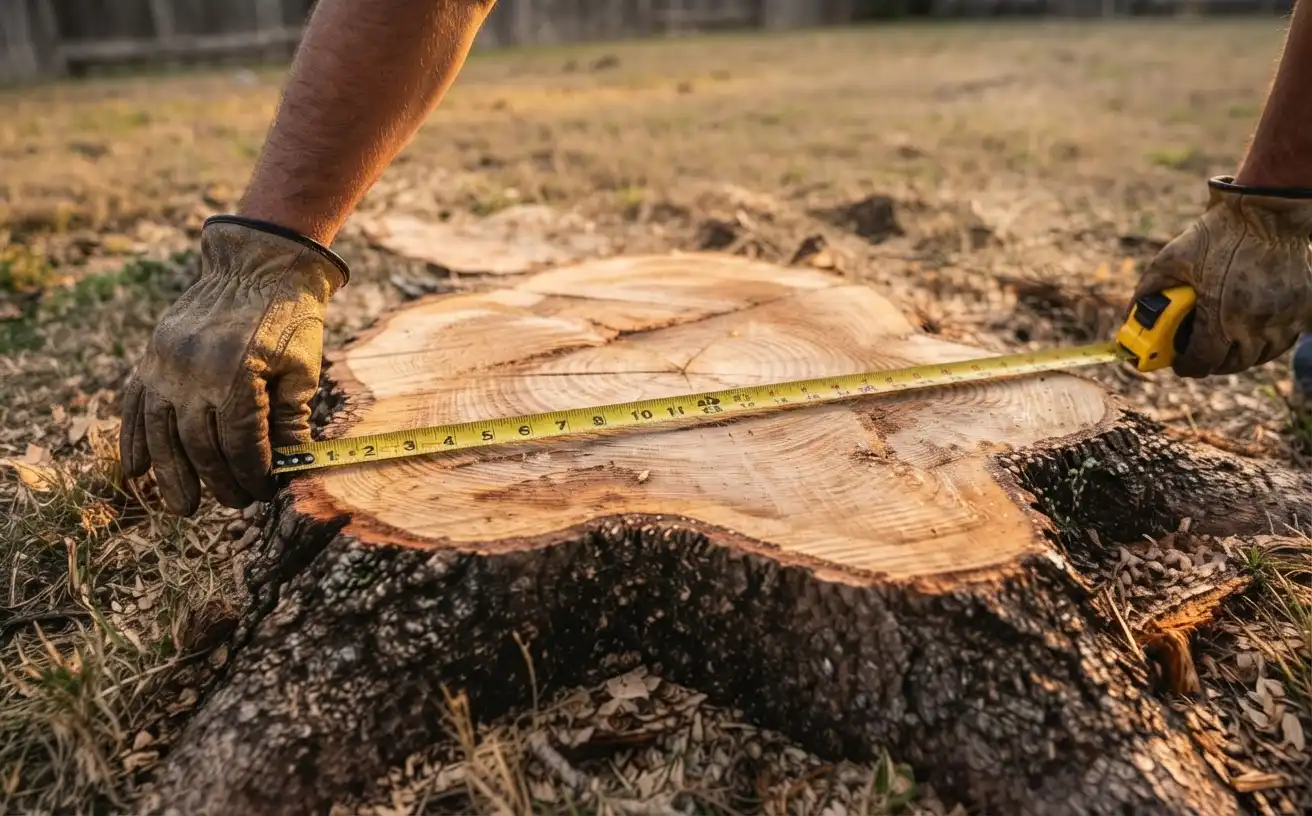
Diameter, root flare, access, and your plans for the space together decide the depth and the price.
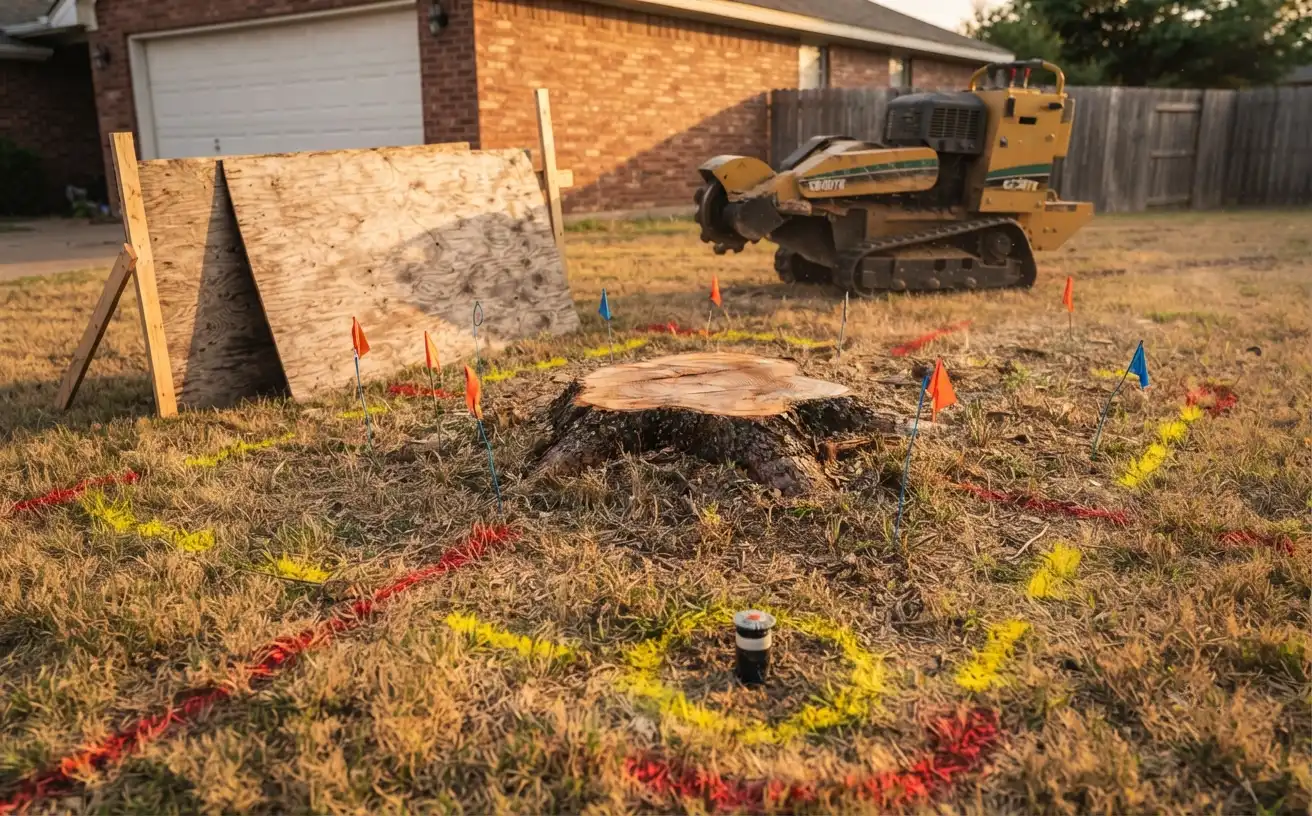
Utilities marked, sprinkler heads flagged, and shields set to keep chips off siding, glass, and cars.
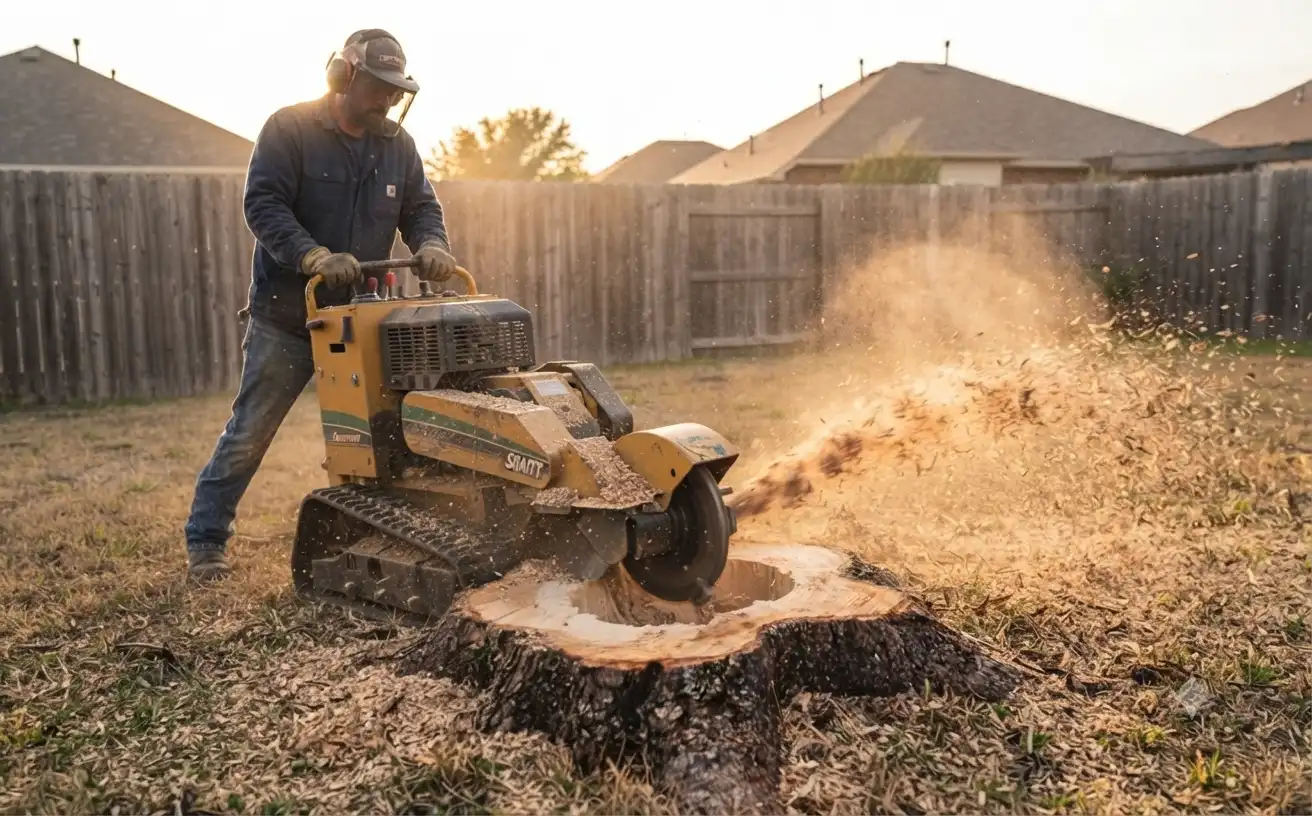
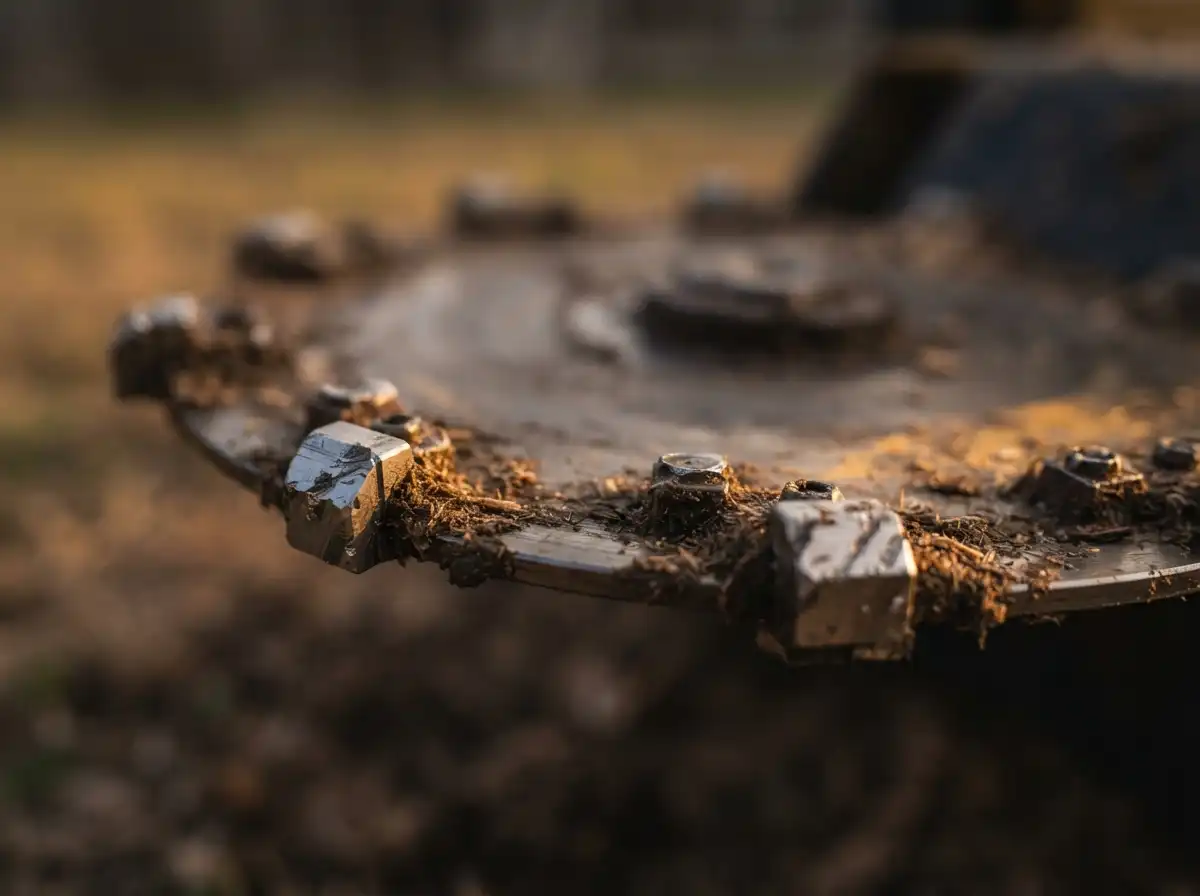
The stump and its surface roots reduced to chips, worked steadily below grade rather than skimmed off the top.
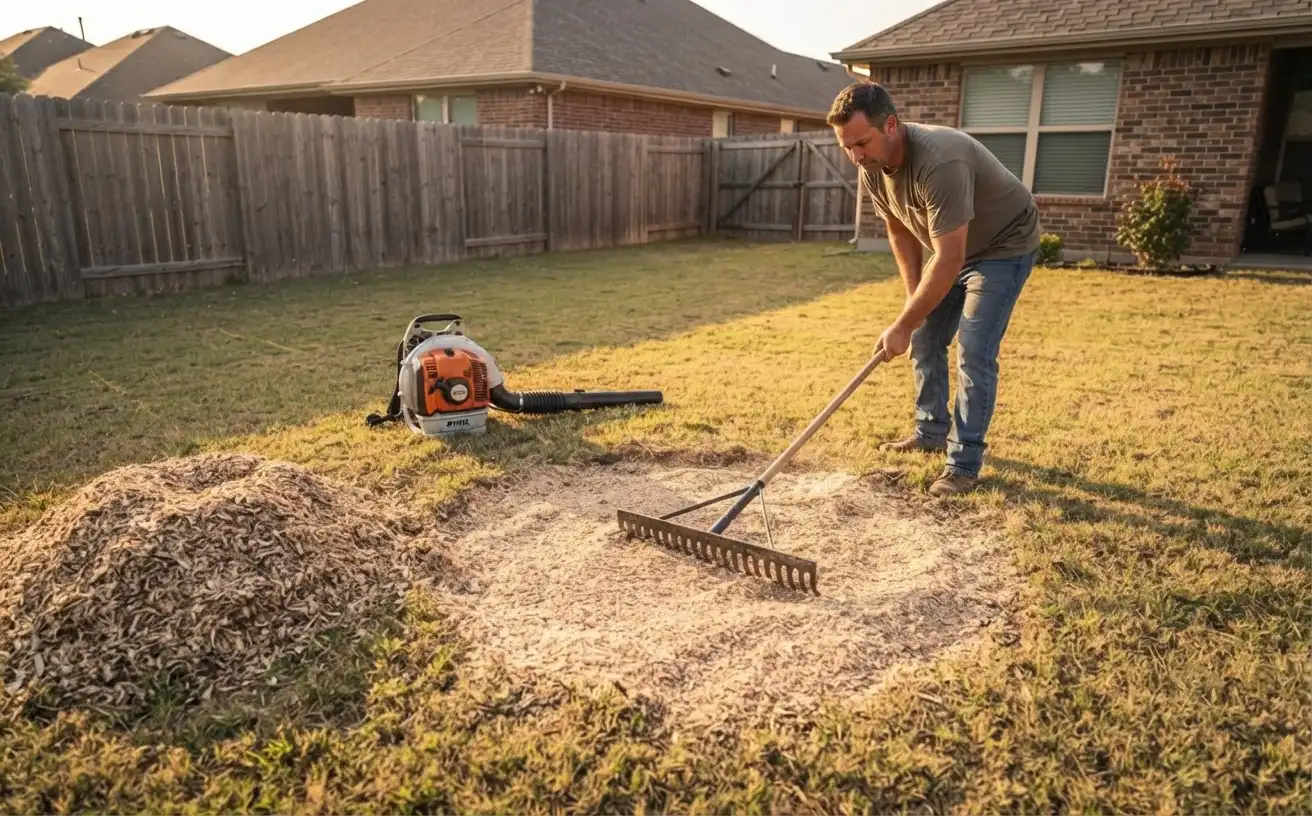
The hollow backfilled and raked level, the area blown clean, and the site left ready for turf.
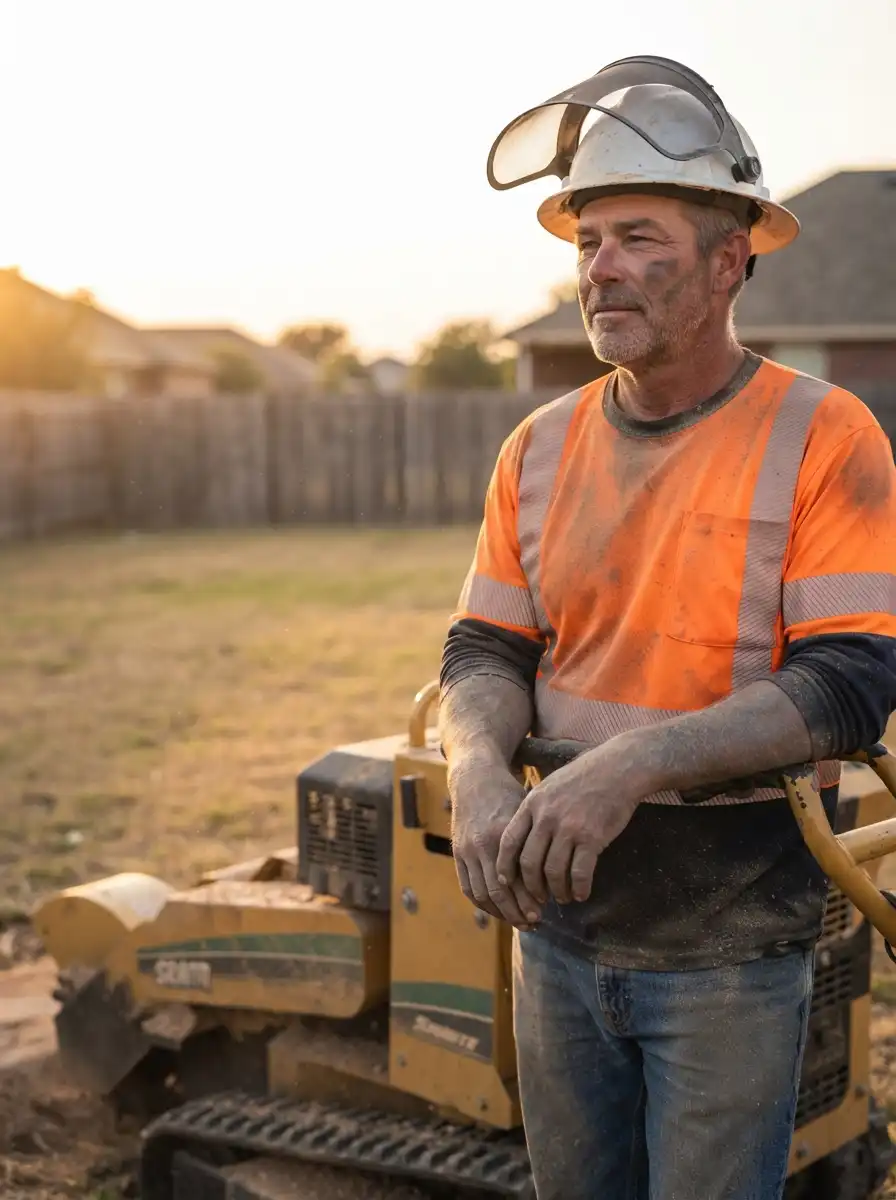
Sod, seed, patio, or a replacement tree each need a different grind. We ask before we start.
Gas, electric, irrigation, and invisible fencing all marked and avoided.
Track machines and matting keep lawns from being churned up on the way in and out.
Backfilled as mulch, spread on your beds, or hauled away with topsoil brought in to replace them.
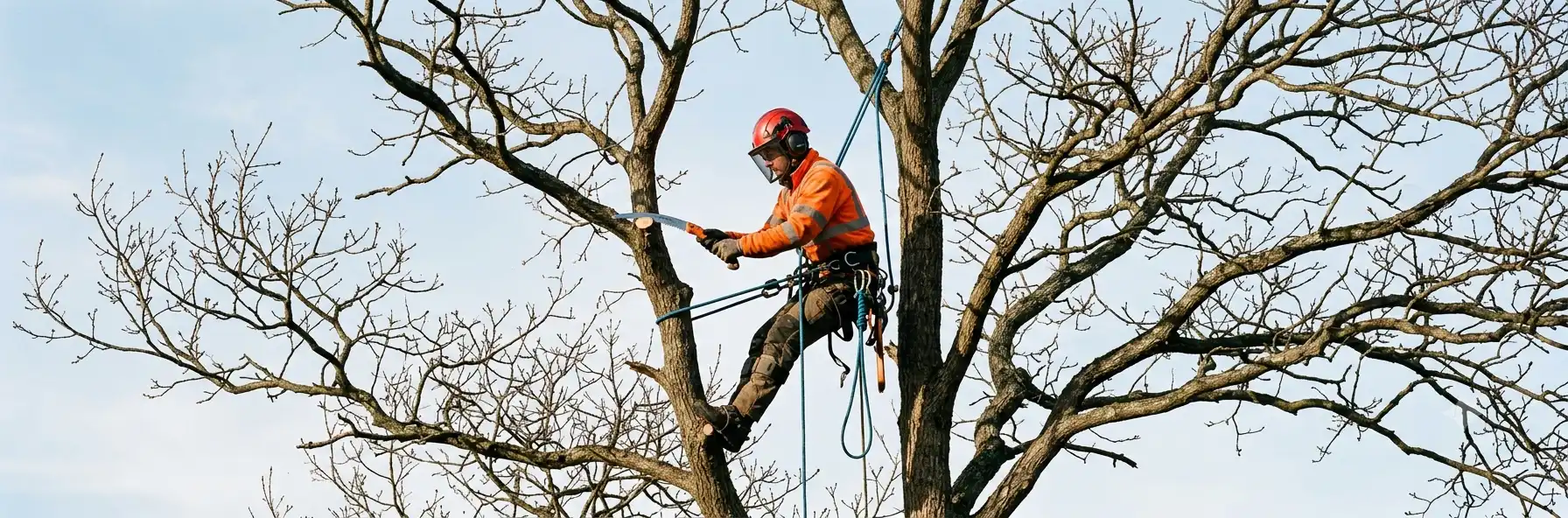
Grinding on the same visit as a takedown is the least expensive way to buy it.
The interesting part of stump work is what the ground looks like afterwards — not the machine.
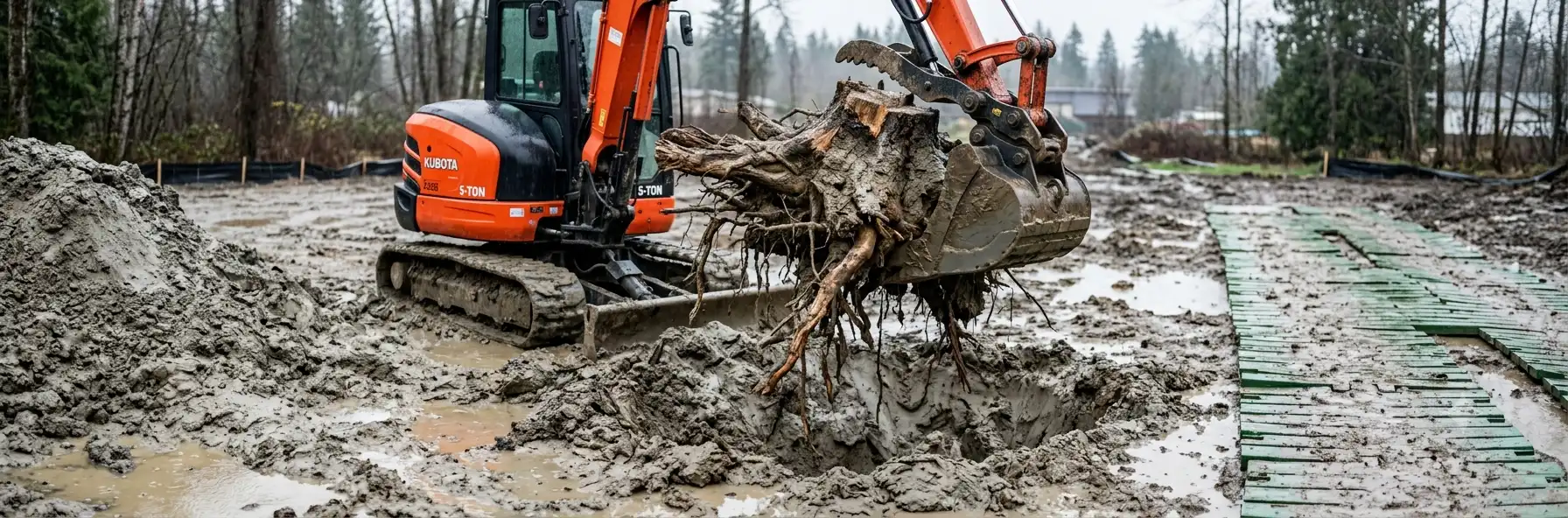
Grinding reduces the stump and its surface roots to chips and leaves the deeper root system to decay naturally underground. Full removal excavates the whole root plate — far more disruptive, far more expensive, and rarely necessary unless you are building on the spot.
Six to eight inches below grade is standard and is plenty for seed or sod. If you are replanting, laying a patio, or pouring concrete we will go twelve inches or more so nothing is left in the way.
Once the stump is ground out the remaining roots have no way to produce leaves and stop growing. A few species send up suckers from the root line for a season; those are easily controlled by mowing.
Yes, with a deeper grind and a soil swap. Wood chips left in the ground tie up nitrogen as they decompose, so we remove the grindings and backfill with topsoil wherever a replacement tree is planned.
Send us the diameter and a photo of the access, or book a quick site visit. Most residential grinds are quoted the same day.