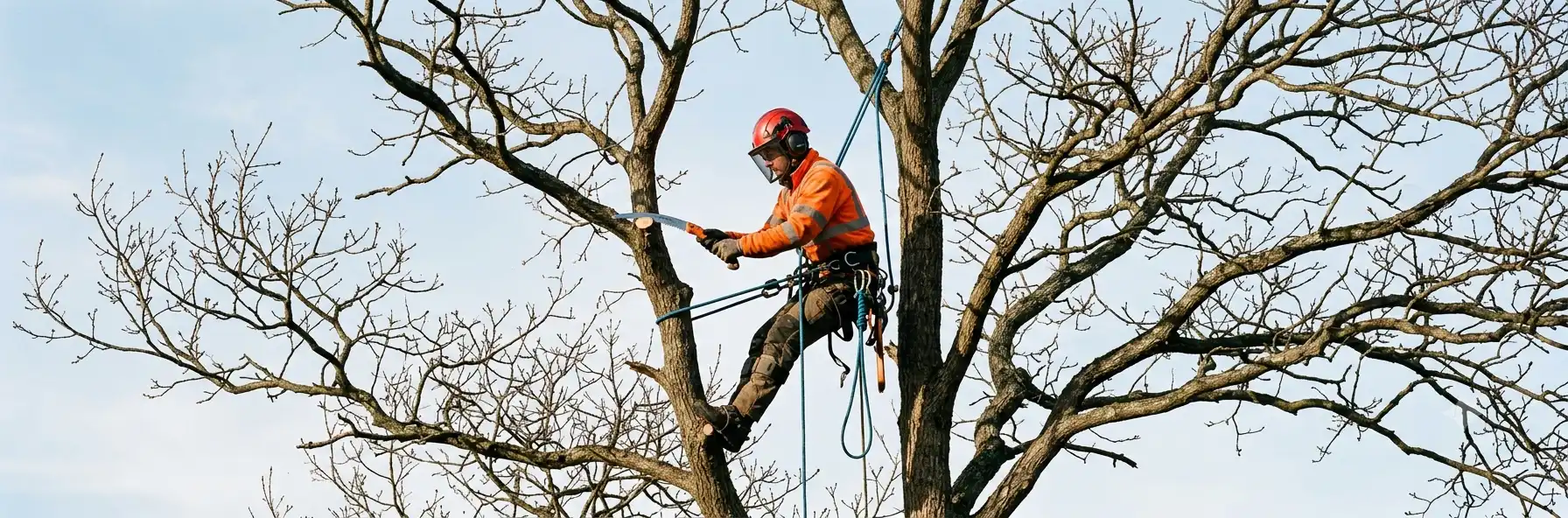


Round-the-Clock Dispatch
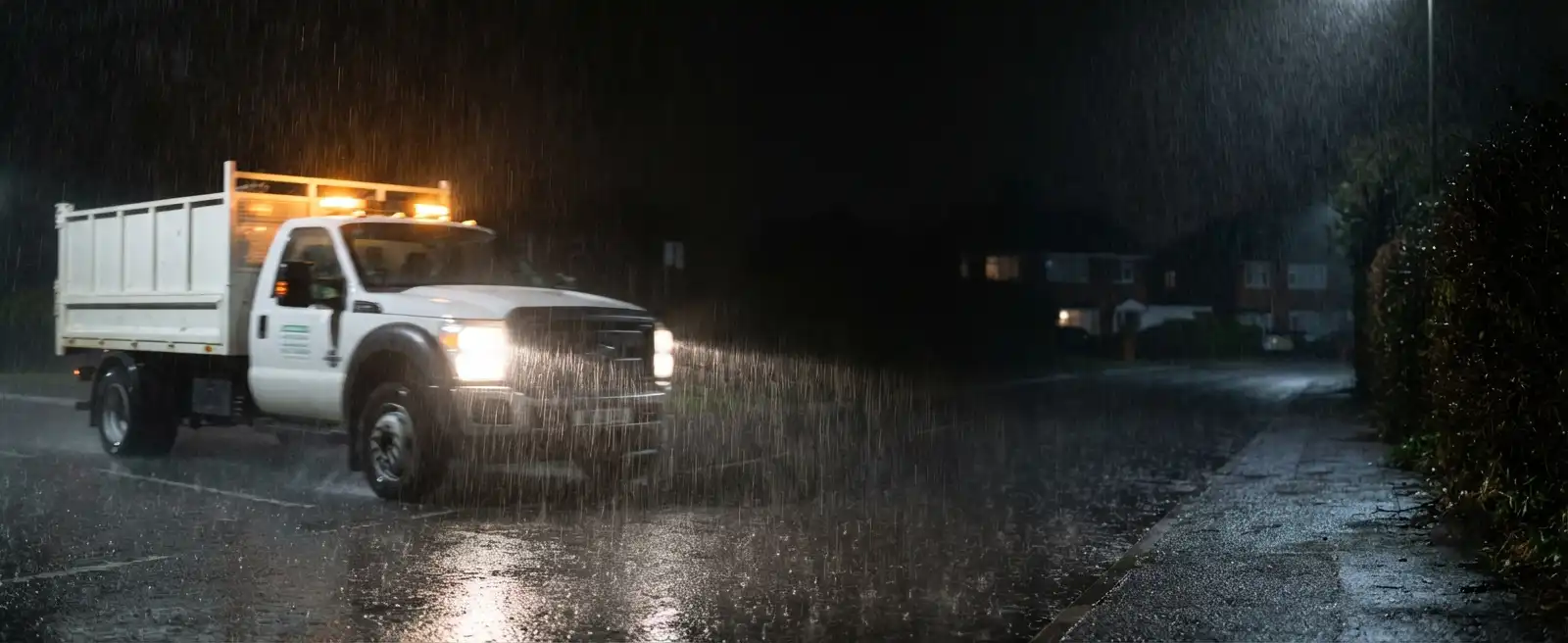
A real person answers the phone at 2am. Crews are on standby through named storms and high-wind advisories.
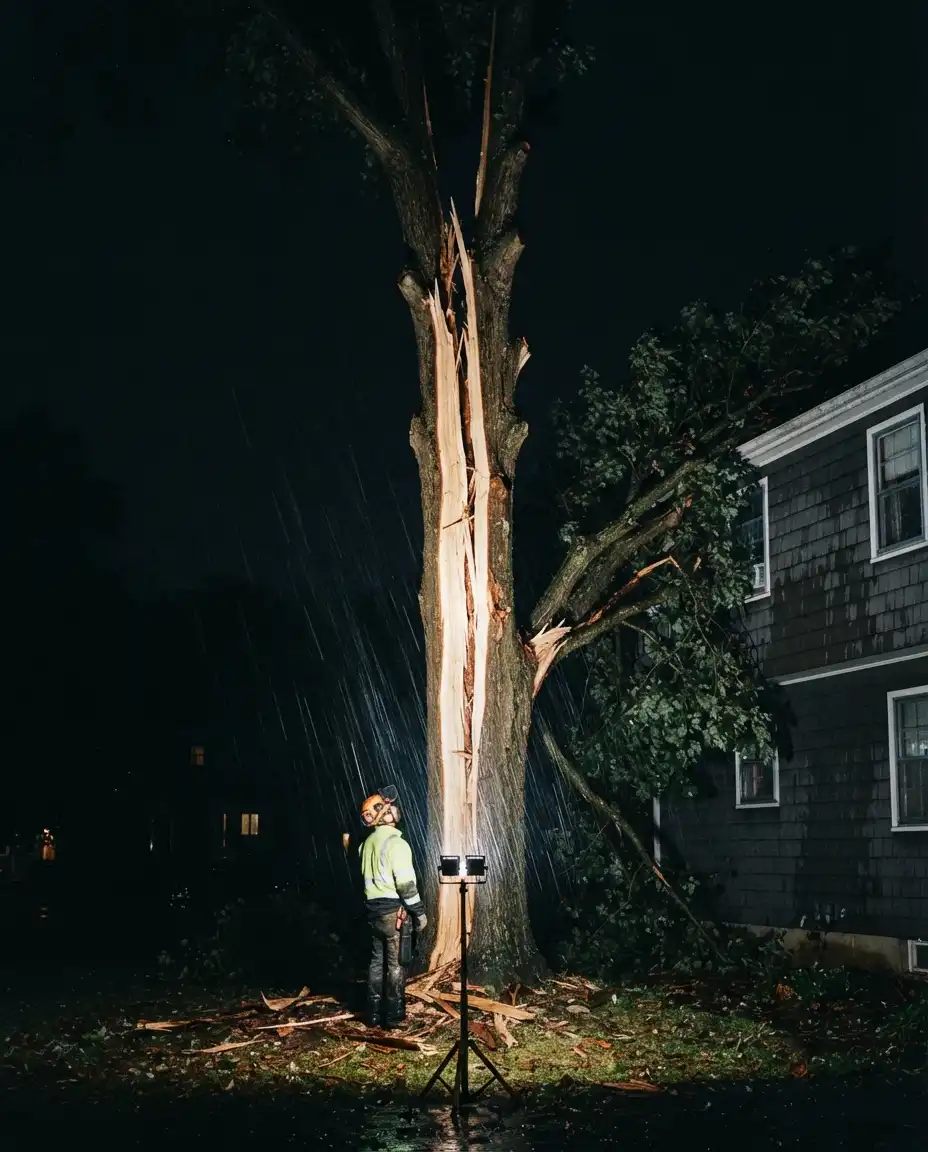
A limb through a roof or a trunk across the driveway is not a job that waits until Monday morning.
Our emergency line is answered around the clock by a person, not a machine. Because our crews are based here rather than dispatched from another county, we are usually on site within hours of your call — and during a widespread storm we work by severity, so anything involving people or occupied buildings goes to the front of the queue.
The first priority is always making the site safe: stabilising what is still standing, clearing access for you and for emergency services, and identifying any contact with electrical service. Only then does the removal start. We photograph and document everything as we work, so you have what your insurer needs without having to go back and ask for it.
Emergency work is priced fairly, not opportunistically. You get the same written scope and itemised invoice you would get on a scheduled job.
A real person answers the phone at 2am. Crews are on standby through named storms and high-wind advisories.
Hanging limbs, split unions, and partially uprooted trees secured or brought down before they can move again.
Driveways, roads, and doorways cleared first so you, your family, and emergency vehicles can move freely.
Trees lifted off roofs, vehicles, and fences in controlled sections to avoid compounding the original damage.
We identify energised contact and coordinate with the utility rather than working around a live line.
Photographs, written assessments, and itemised invoices formatted for your claims adjuster.
When the wind takes a tree down at 2am, the phone is answered by a person — and a crew is already on the road.
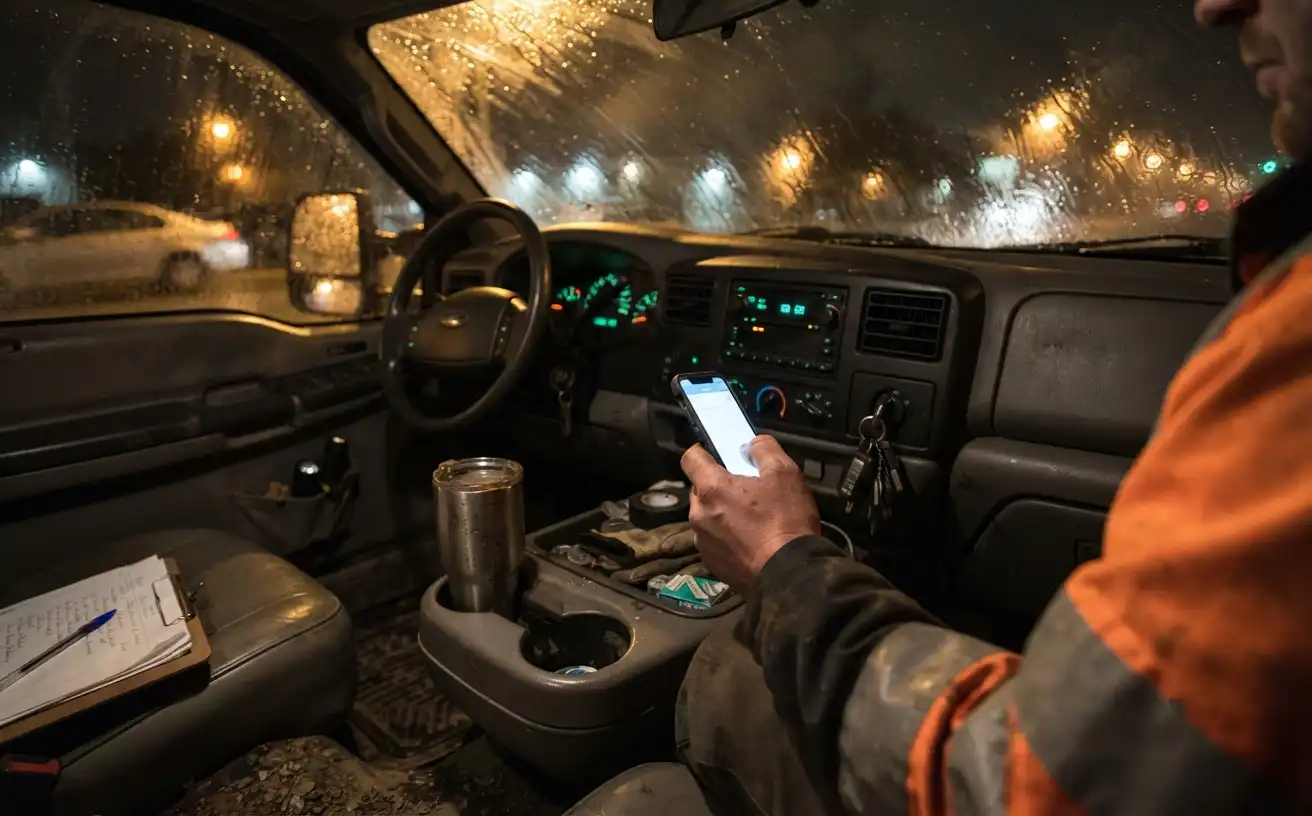
Describe what is down and what it is touching. We triage on the phone and dispatch immediately if life or property is at risk.
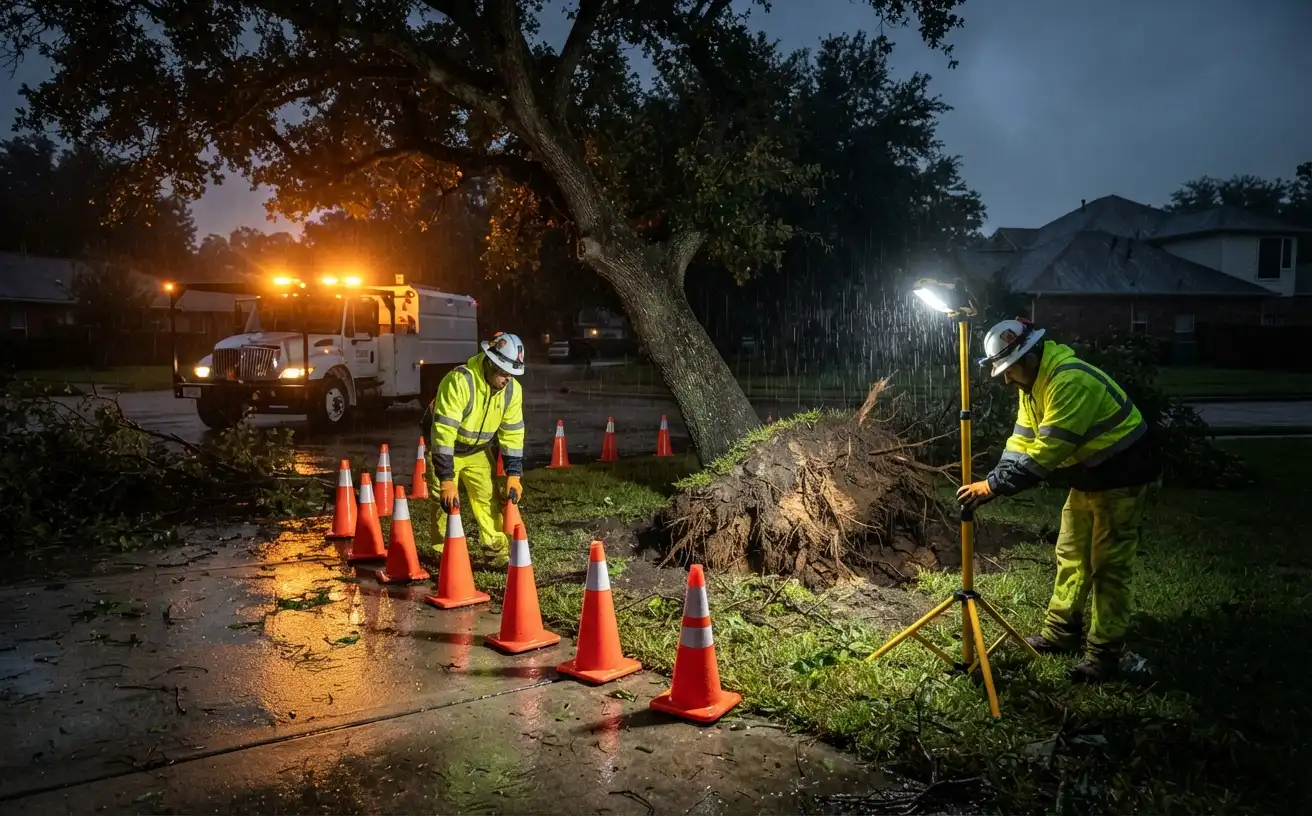
The first crew on site secures the hazard, isolates the area, and confirms there is no live electrical contact.
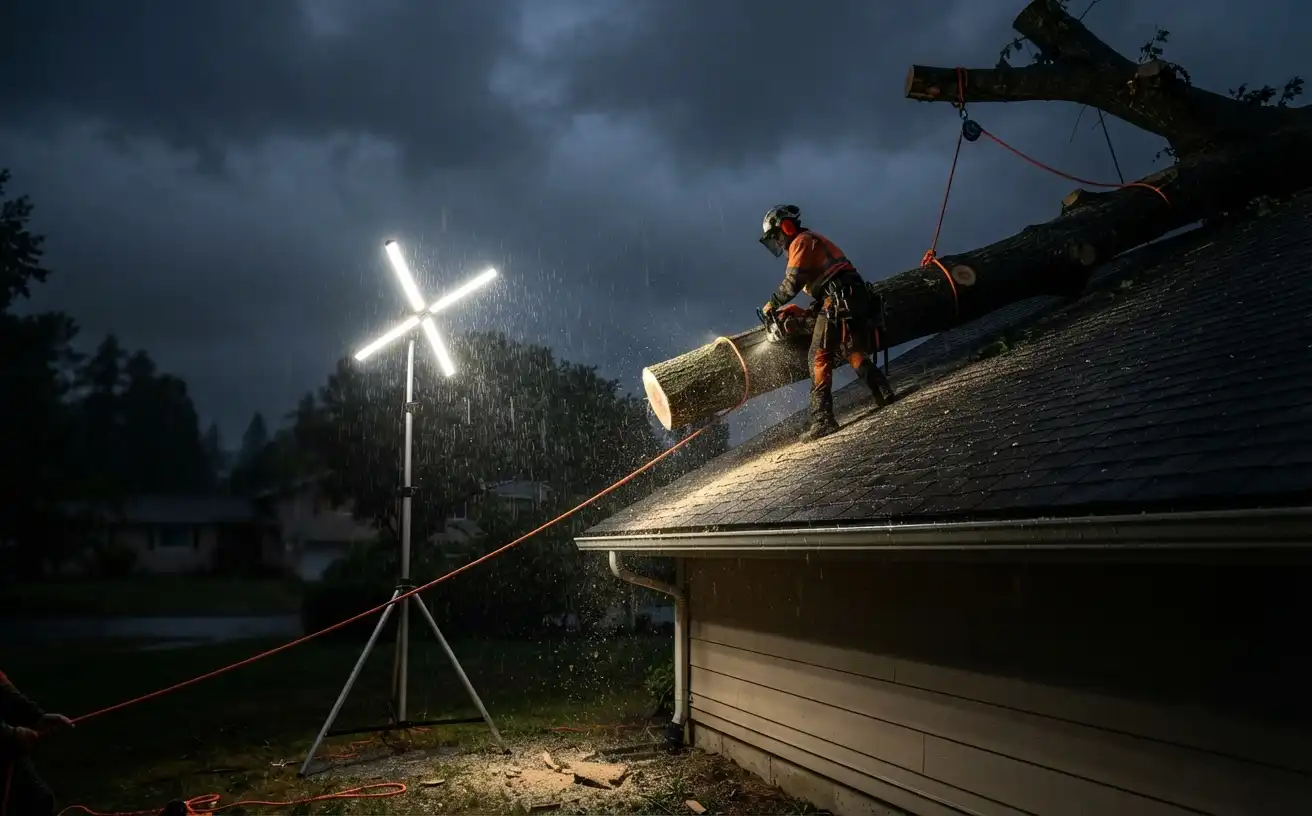
The tree is dismantled in sections, working away from the structure it landed on rather than through it.
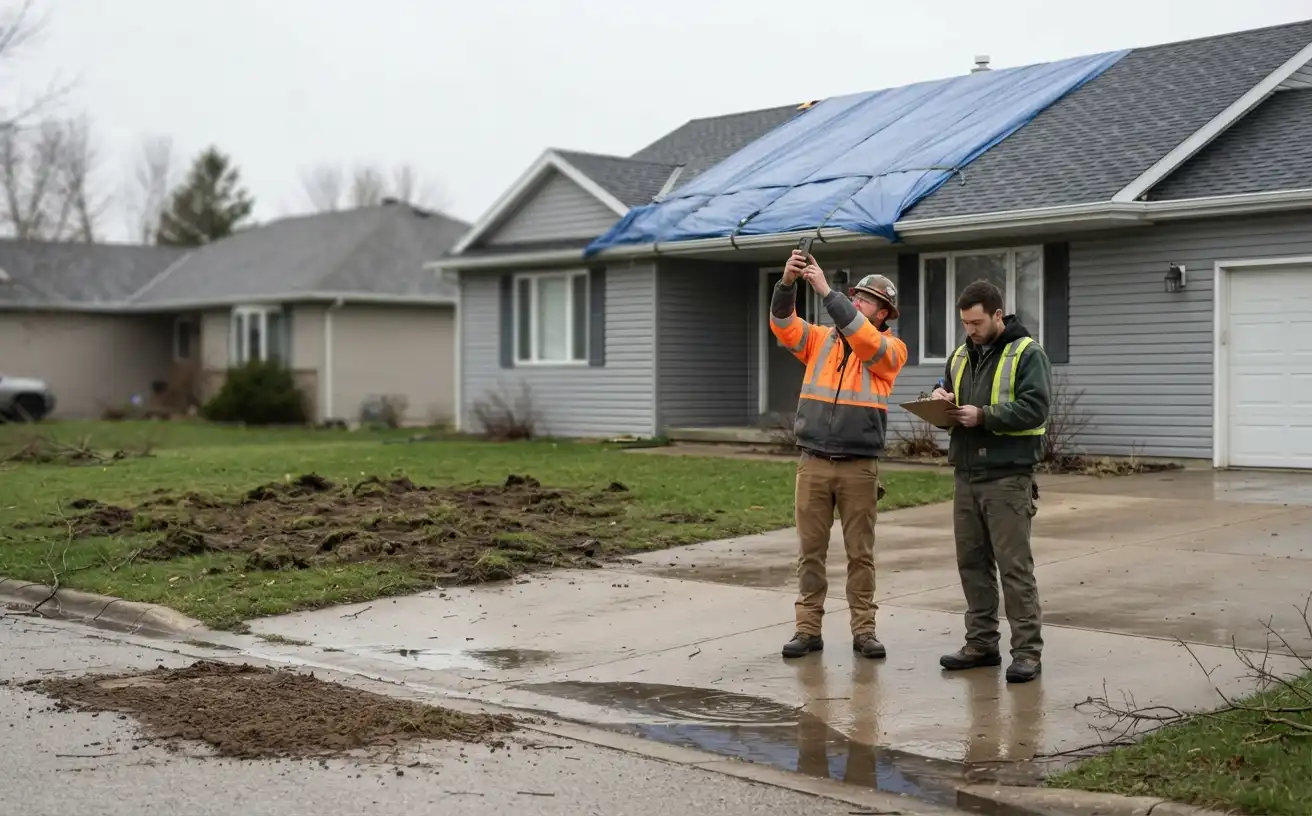
The site is cleared, photographed, and written up — everything your insurer will ask for, ready before you need it.
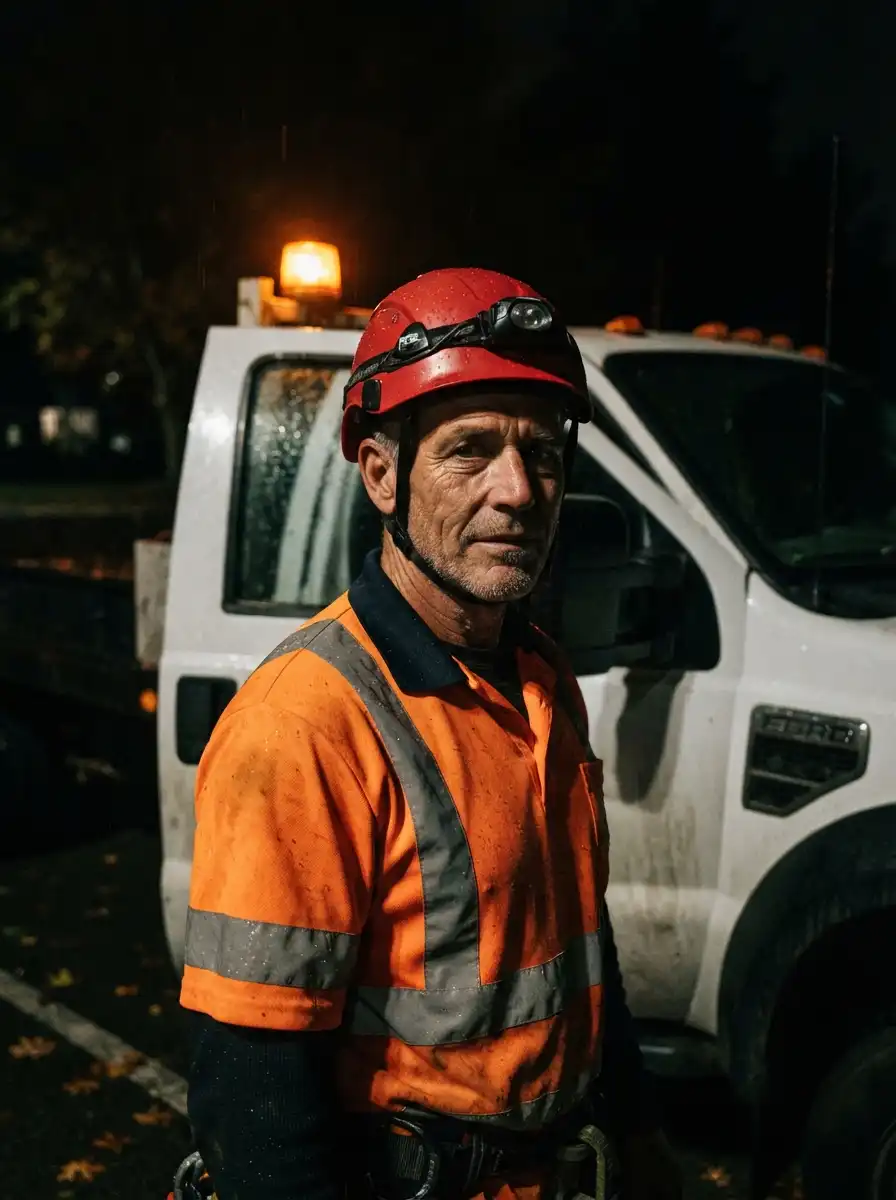
Twenty-four hours, three hundred and sixty-five days. Storm nights included — especially storm nights.
Our trucks are not three counties away when the wind picks up.
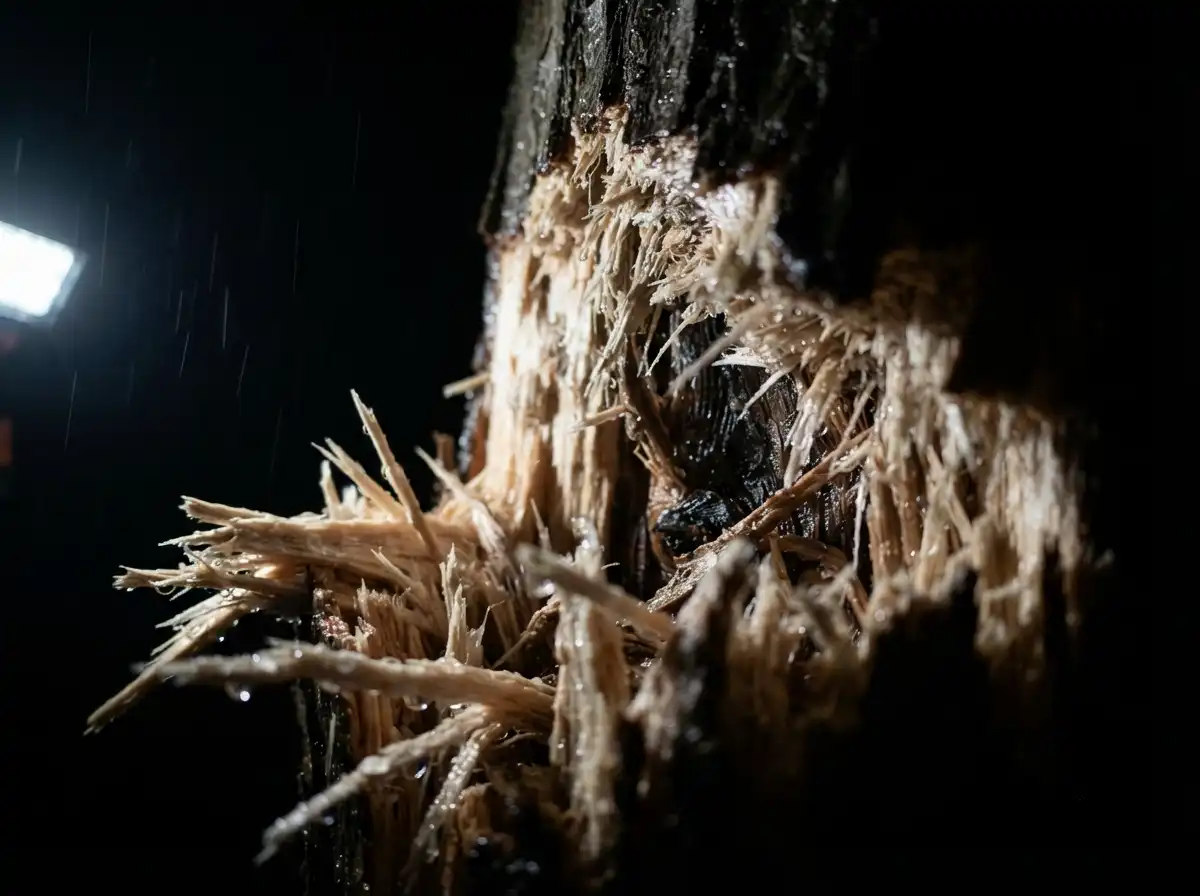
Storm-damaged wood behaves unpredictably. Our crews are equipped and rated for exactly that.
Documented as we go, so your claim is not held up waiting on missing evidence.
Where a roof has been opened up, we help protect the interior until your contractor arrives.
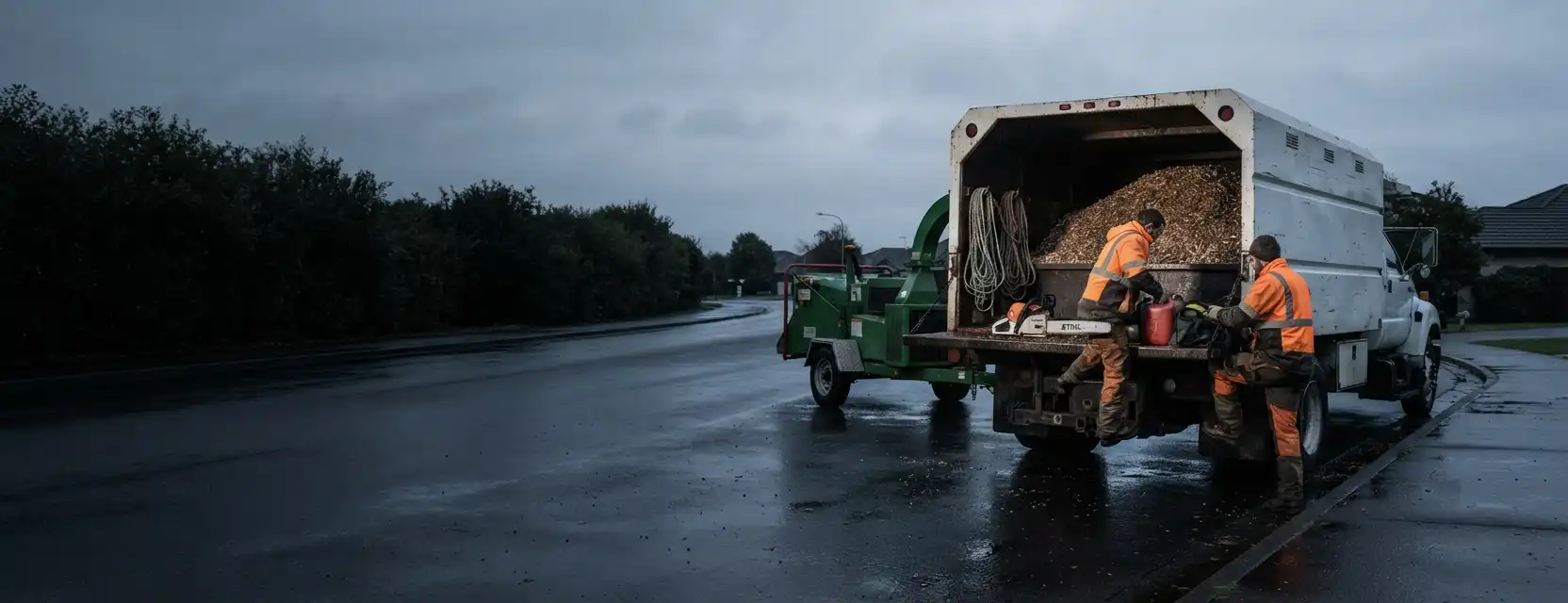
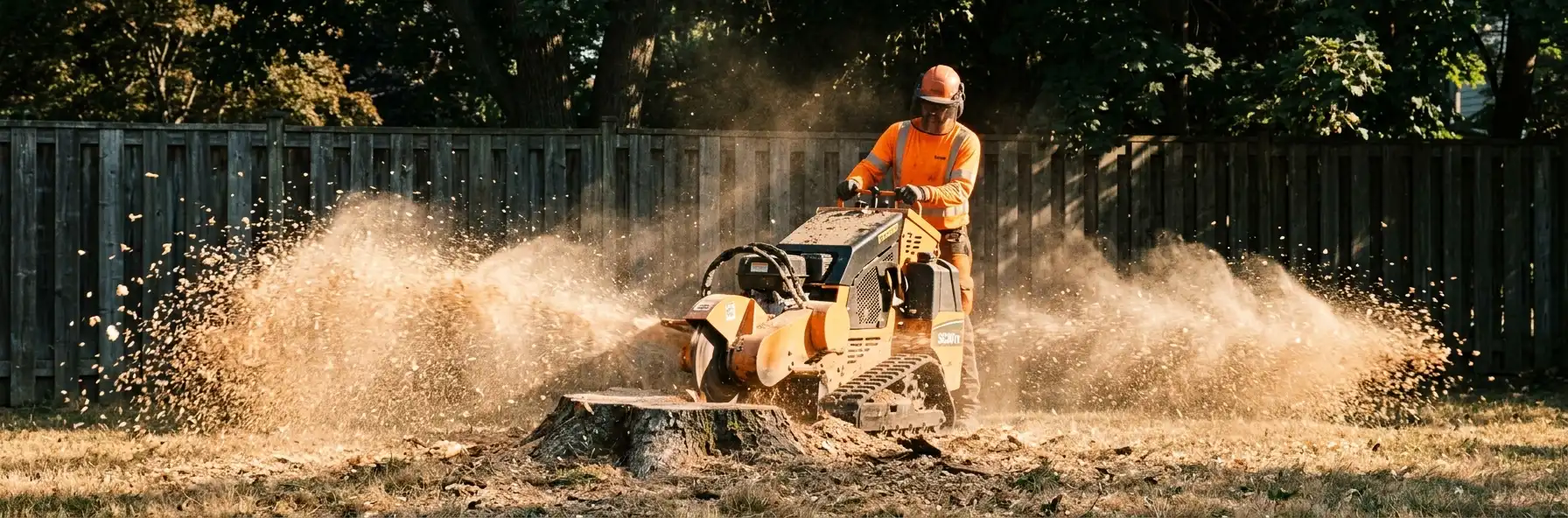
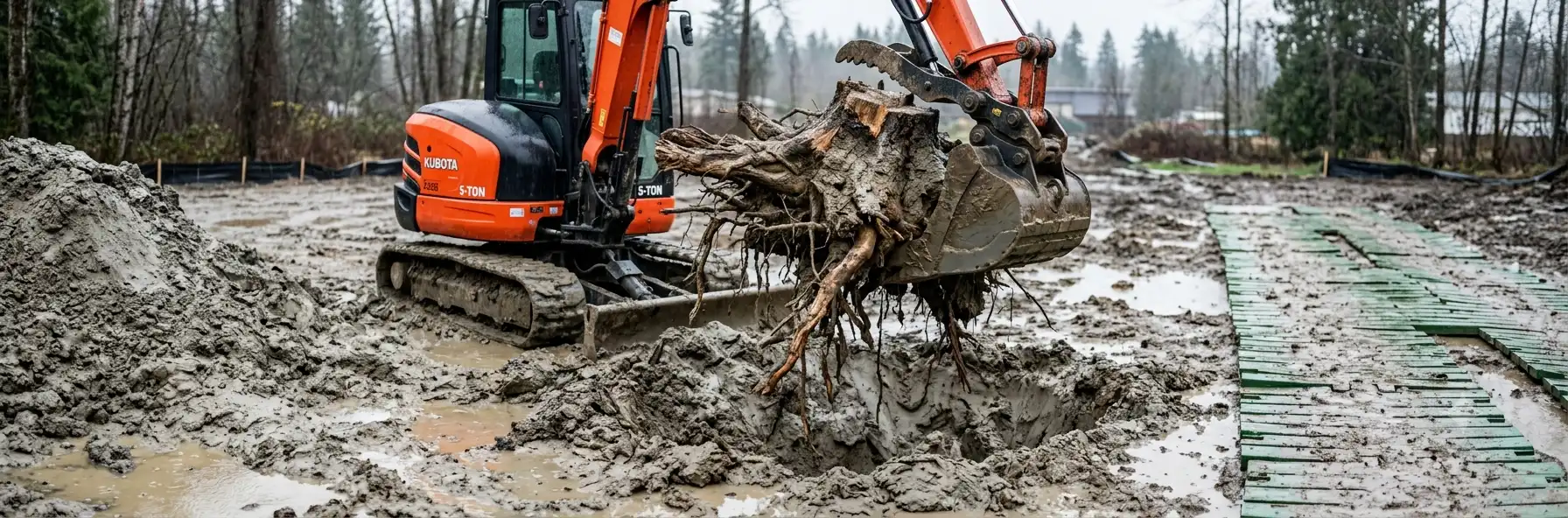
Storm work rarely looks tidy while it is happening. These are jobs photographed as they were made safe.
Anything touching a structure, a vehicle, or a power line; any tree that has partially uprooted or split; and any limb hanging over an area people use. If you are not sure, call anyway — triaging it over the phone costs you nothing.
Hazard calls are typically reached within a couple of hours. During a widespread storm we work by severity, so situations involving people, occupied structures, or electrical contact are attended first.
Most homeowner policies cover removal when a tree has damaged an insured structure, and many contribute toward debris removal even when it has not. We document the job thoroughly and invoice in a format adjusters accept, which makes the claim considerably easier.
Stay well away from it and treat every downed line as live. Call the utility and emergency services first, then call us. We will not work on an energised contact until the line has been confirmed de-energised.
The emergency line is answered in person at any hour. Tell us what is down and what it is touching, and we will dispatch from there.