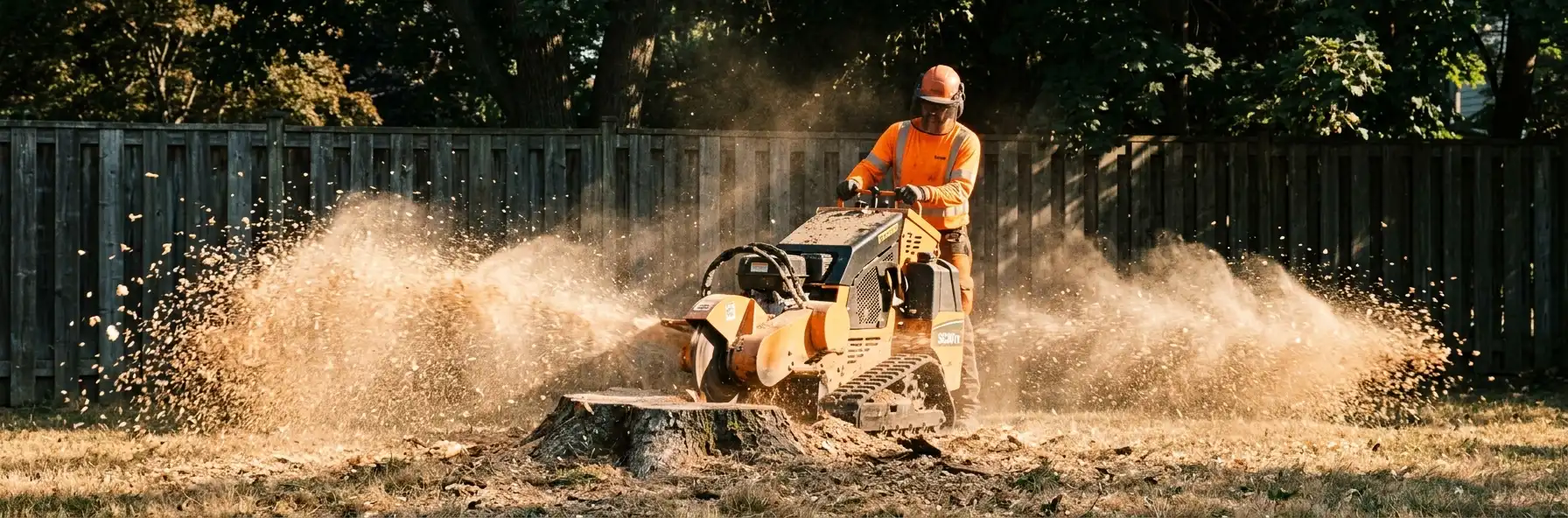


Engineered Lift Plan
Pick weights calculated section by section and checked against the crane's load chart at the radius we will actually be working.
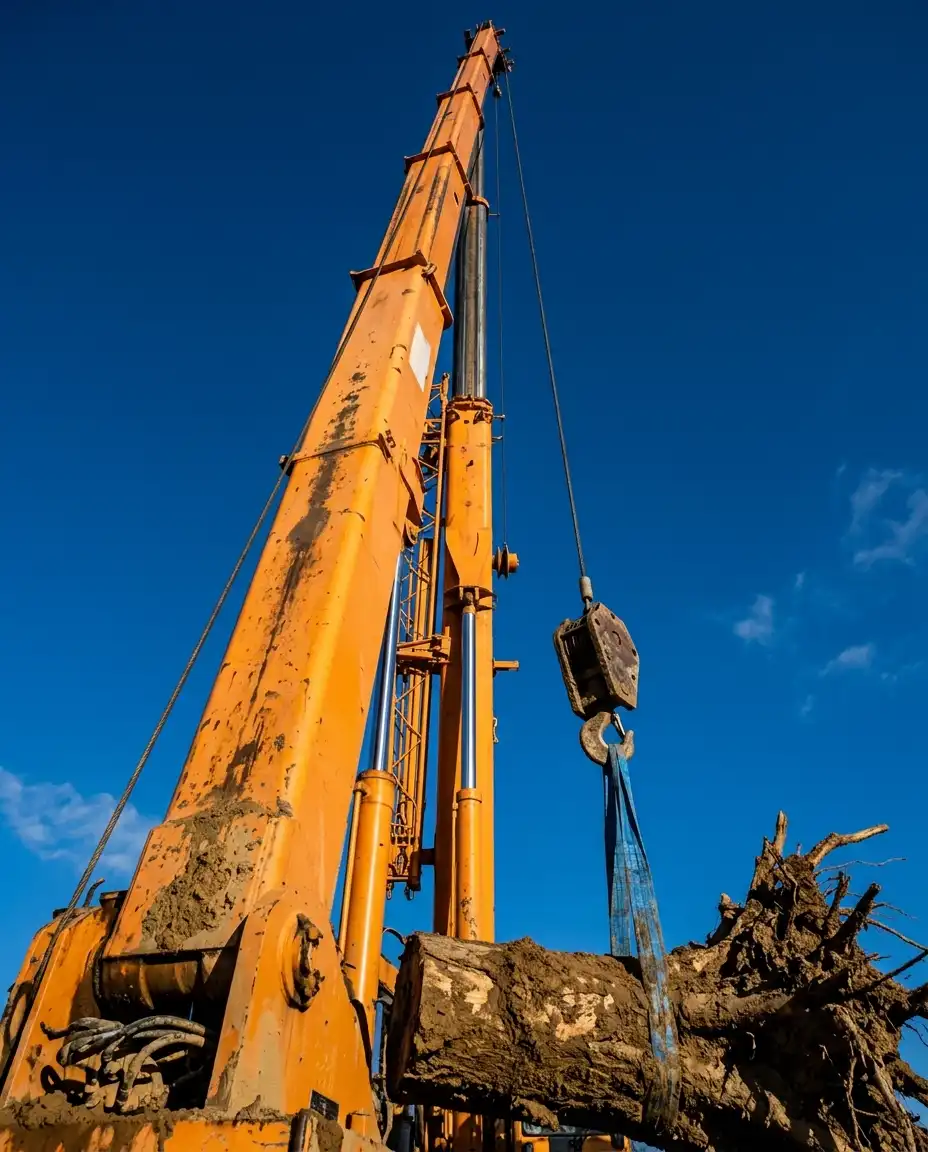
Conventional removal needs somewhere for the wood to go. Rig it down and the loads run through the tree itself; fell it and you need a clear corridor the length of the trunk. Some sites offer neither.
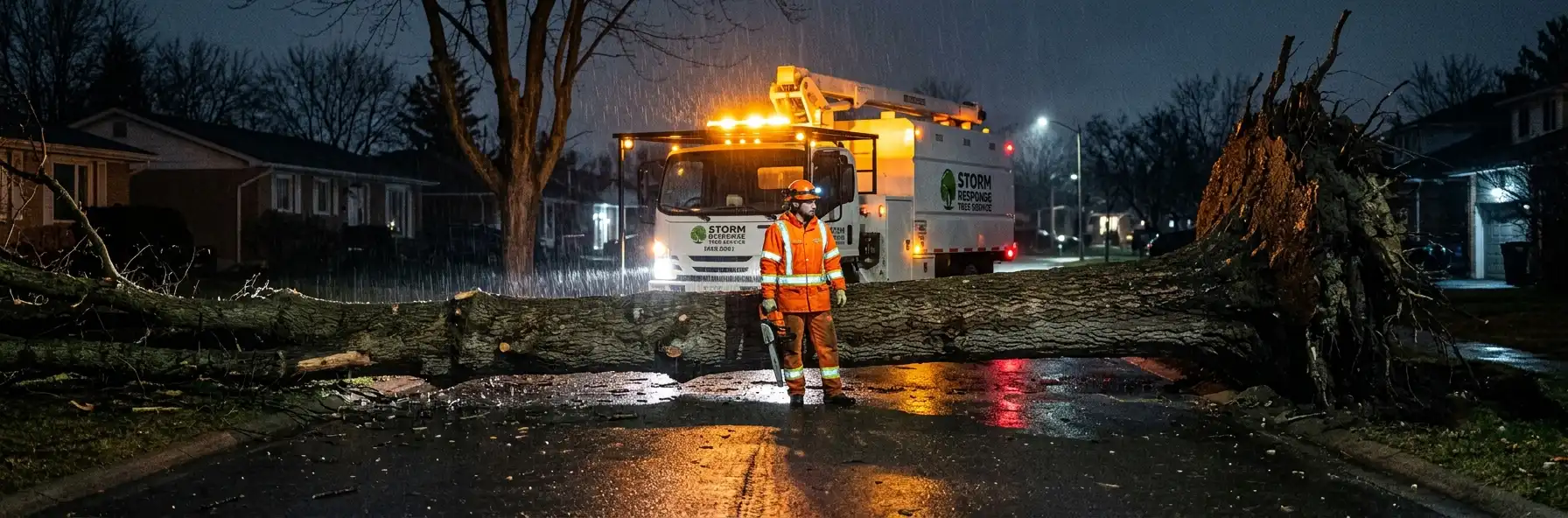
A dead or decayed tree is the clearest case. Rigging works by loading the trunk and the branch unions, and on a tree that is already failing there is nothing sound left to load. Dropping a piece into a speed line can be the thing that brings the whole stem down.
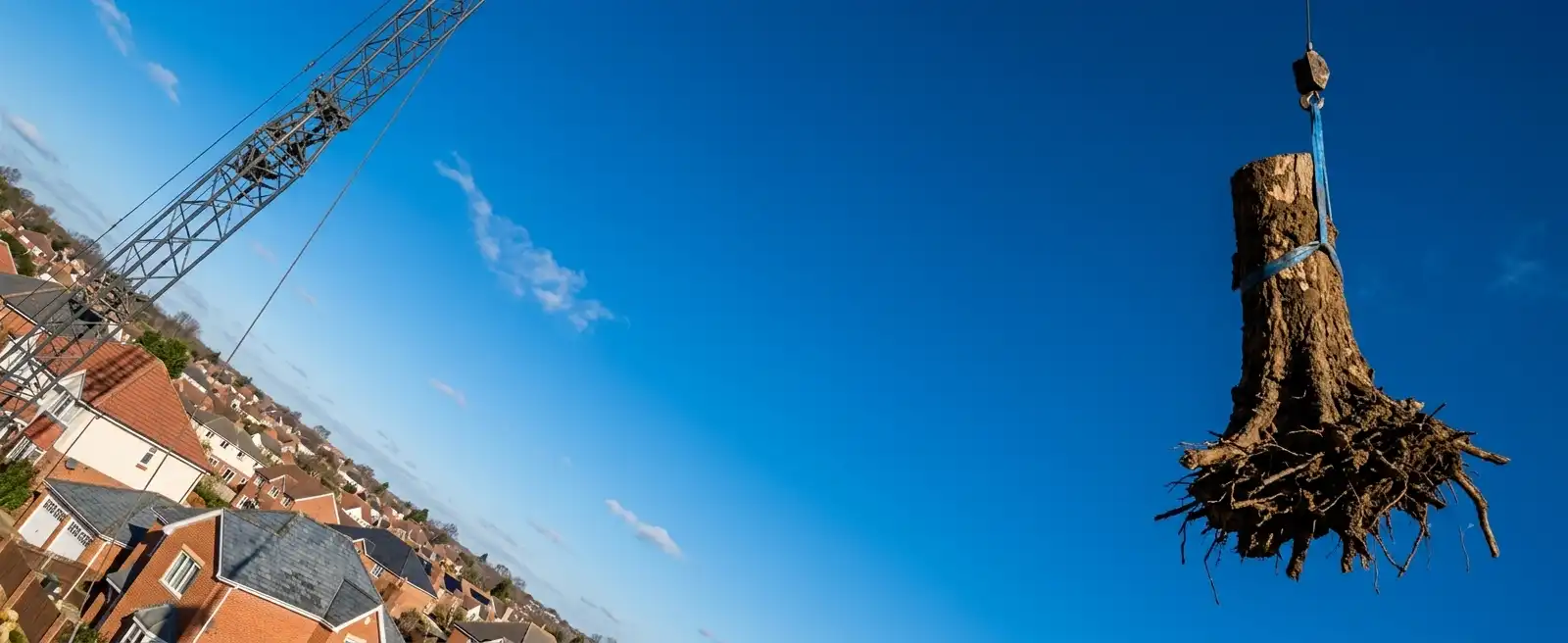
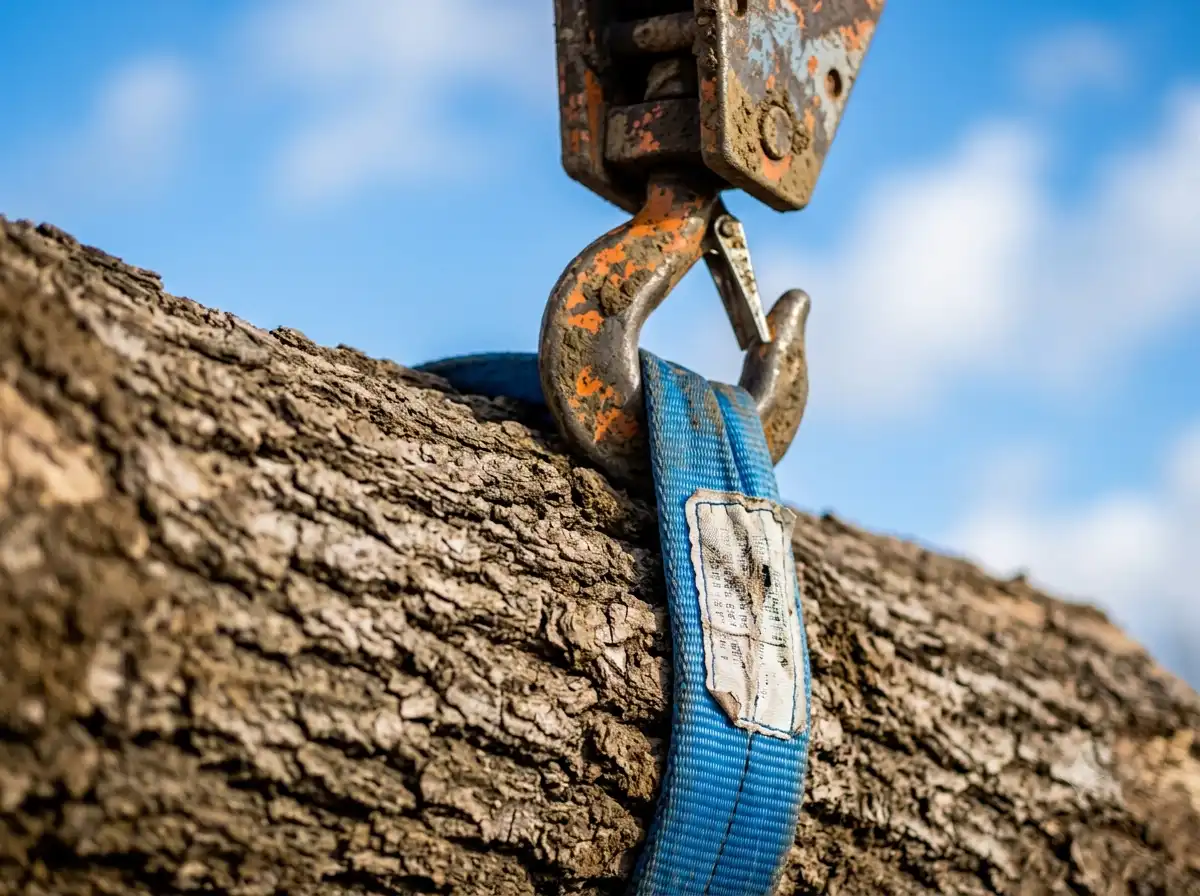
A crane takes the load out of the equation. Each section is choked, lifted under tension before the cut is finished, then flown clear of the property and set down in the street or on a truck. The wood never touches your roof, your fence, or your garden — because it never travels through them.
It also finishes far faster. A large removal that would take a climbing crew two or three days of rigging is often a single day with a crane, which usually closes most of the gap in cost — and it keeps the crew out of a tree nobody should be climbing.
Crane work is priced off the lift plan, not the tree. Reach, pick weights, and where the machine can legally set up decide the day.
Pick weights calculated section by section and checked against the crane's load chart at the radius we will actually be working.
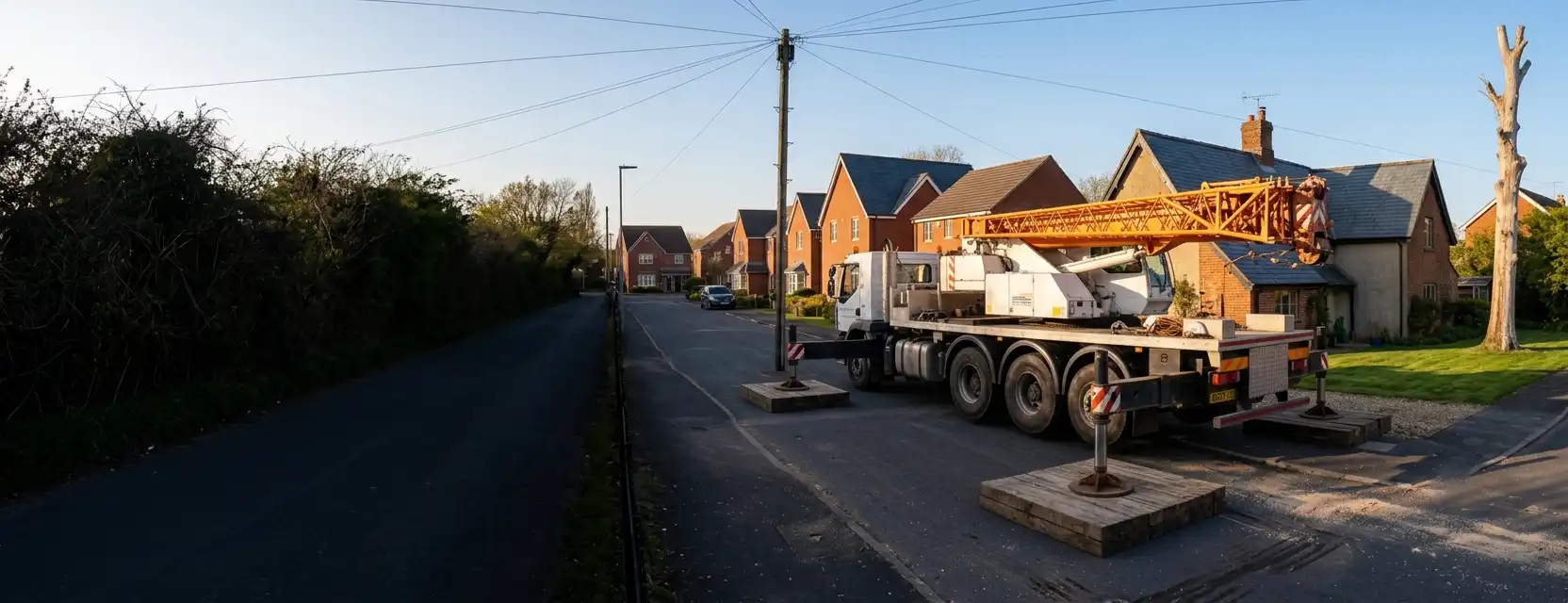
The right machine for the reach, set on ground that will carry it, with outrigger cribbing spread to protect the surface.
A qualified operator on the sticks and a climber trained in crane-assisted removal setting every choke.
Sections flown clear of roofs, conservatories, pools, and fences rather than lowered anywhere near them.
Road permits, cones, and banksmen arranged where the crane has to set up on or over the highway.
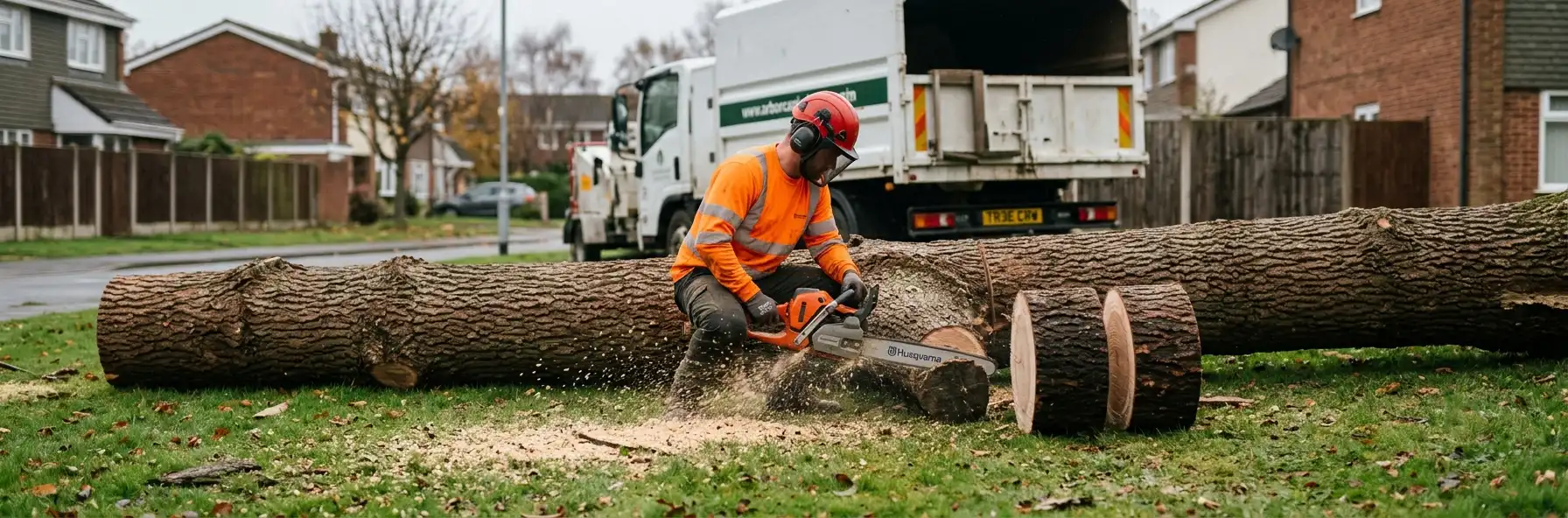
Wood cut down and loaded from the set-down area, brush chipped, and the whole site swept before we release the road.
Rigging asks a failing tree to carry the load of its own removal. A crane never asks it to carry anything at all.
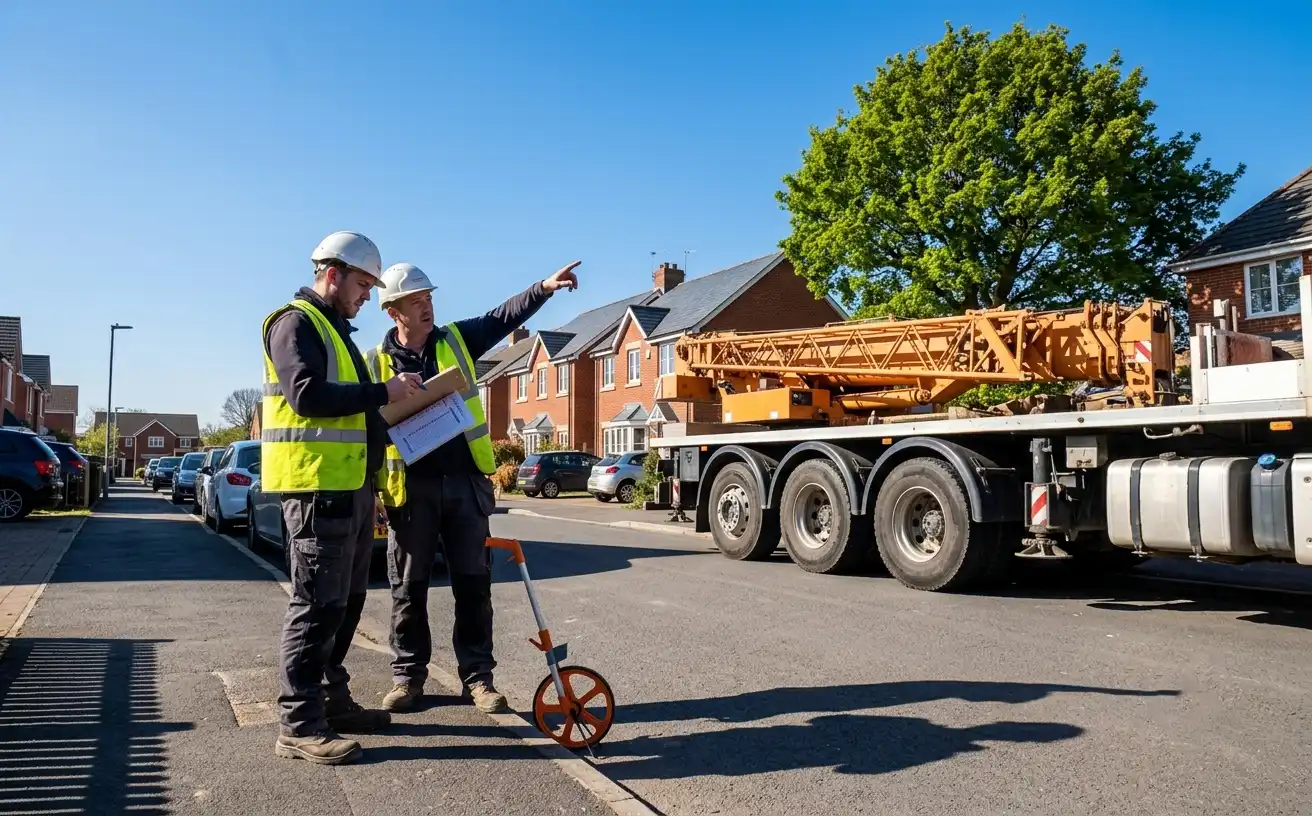
We measure reach, weigh the picks, and confirm where the crane can set up before a price is written.
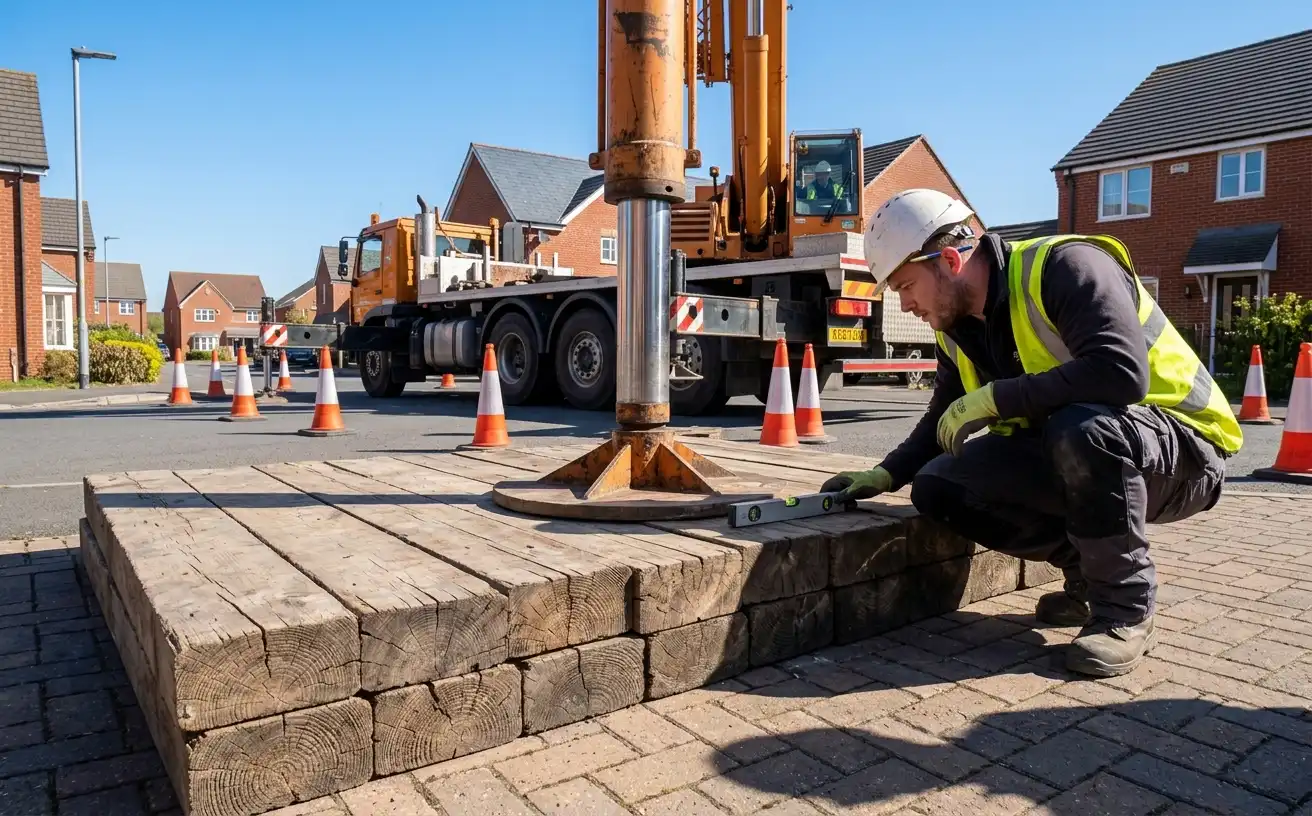
Outriggers set on spread cribbing, exclusion zone marked, and the set-down area cleared and protected.
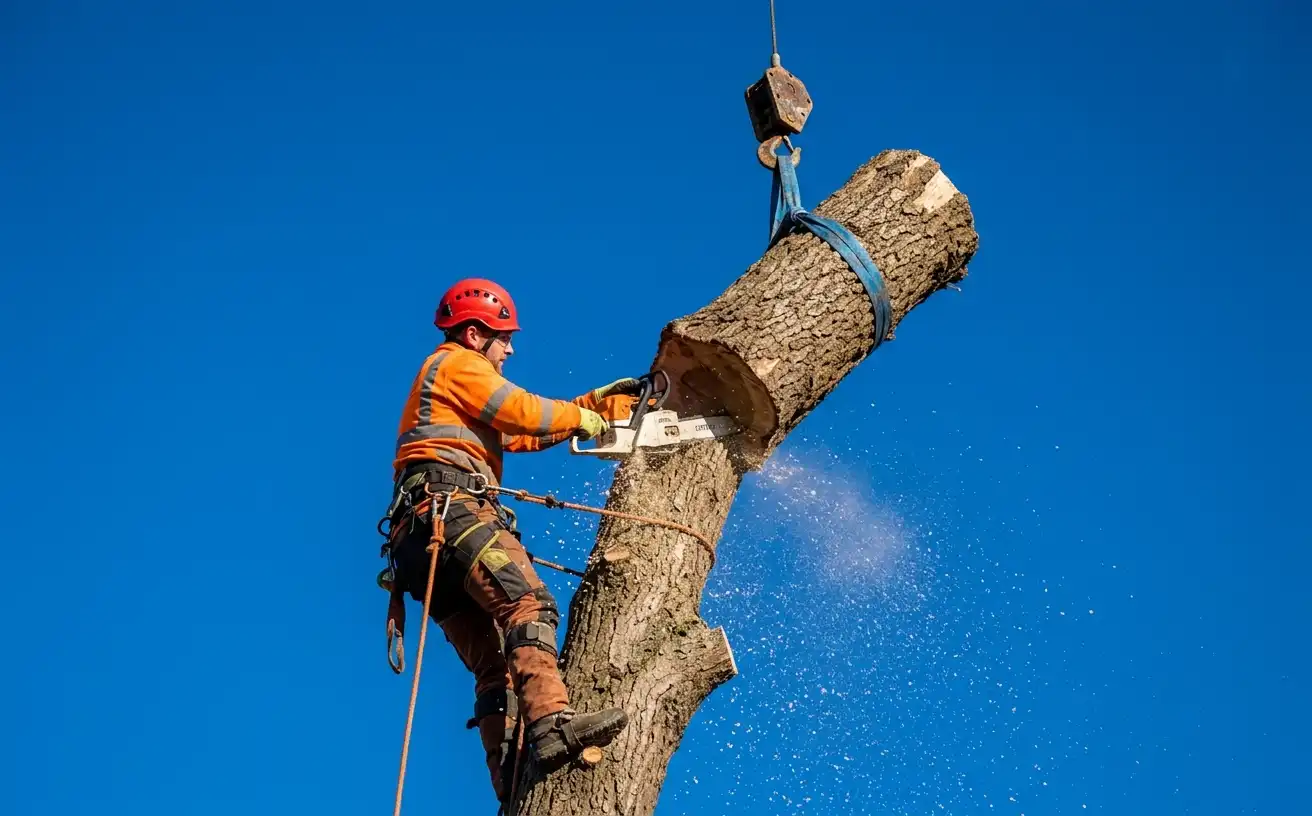
Each piece choked and taken under tension before the cut finishes, then flown clear of the property.
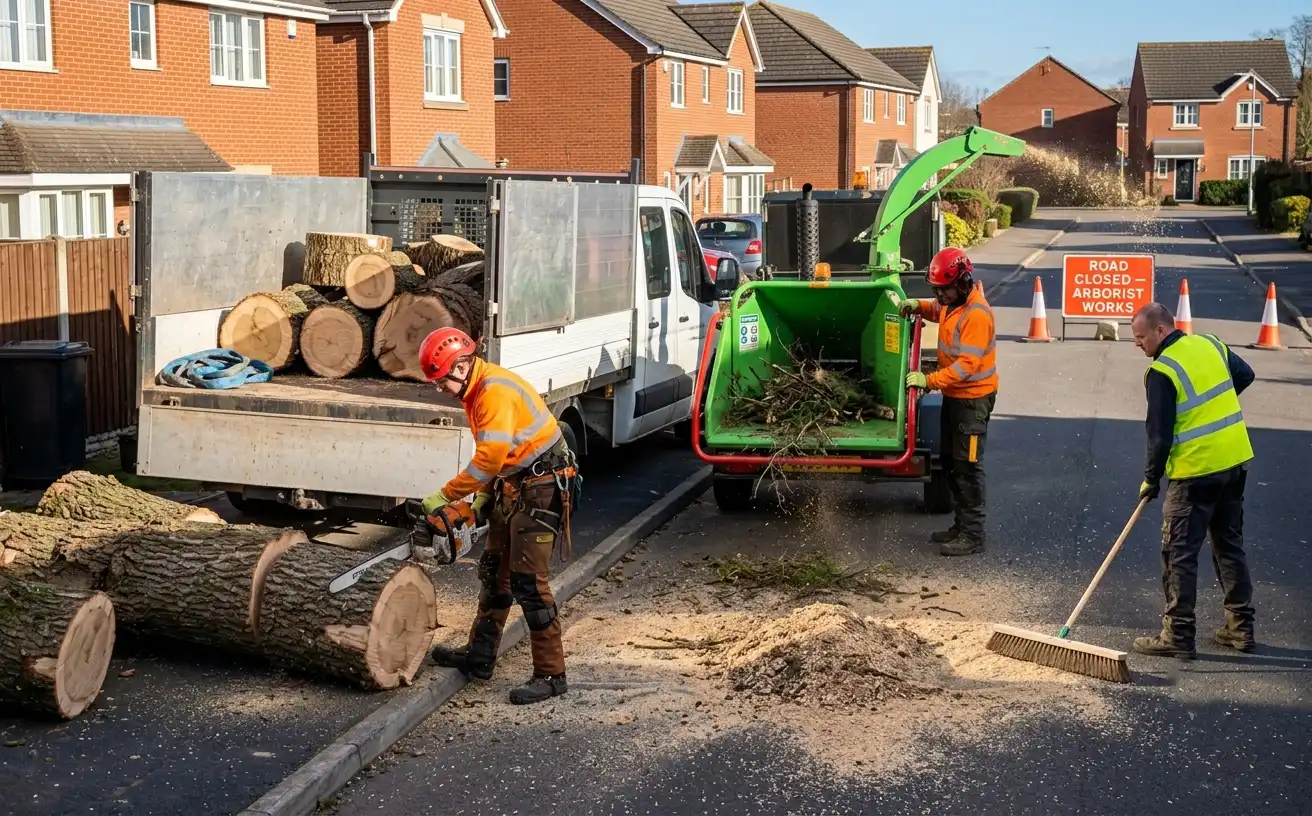
Wood cut and loaded at the set-down, brush chipped, road swept, and the site handed back clean.
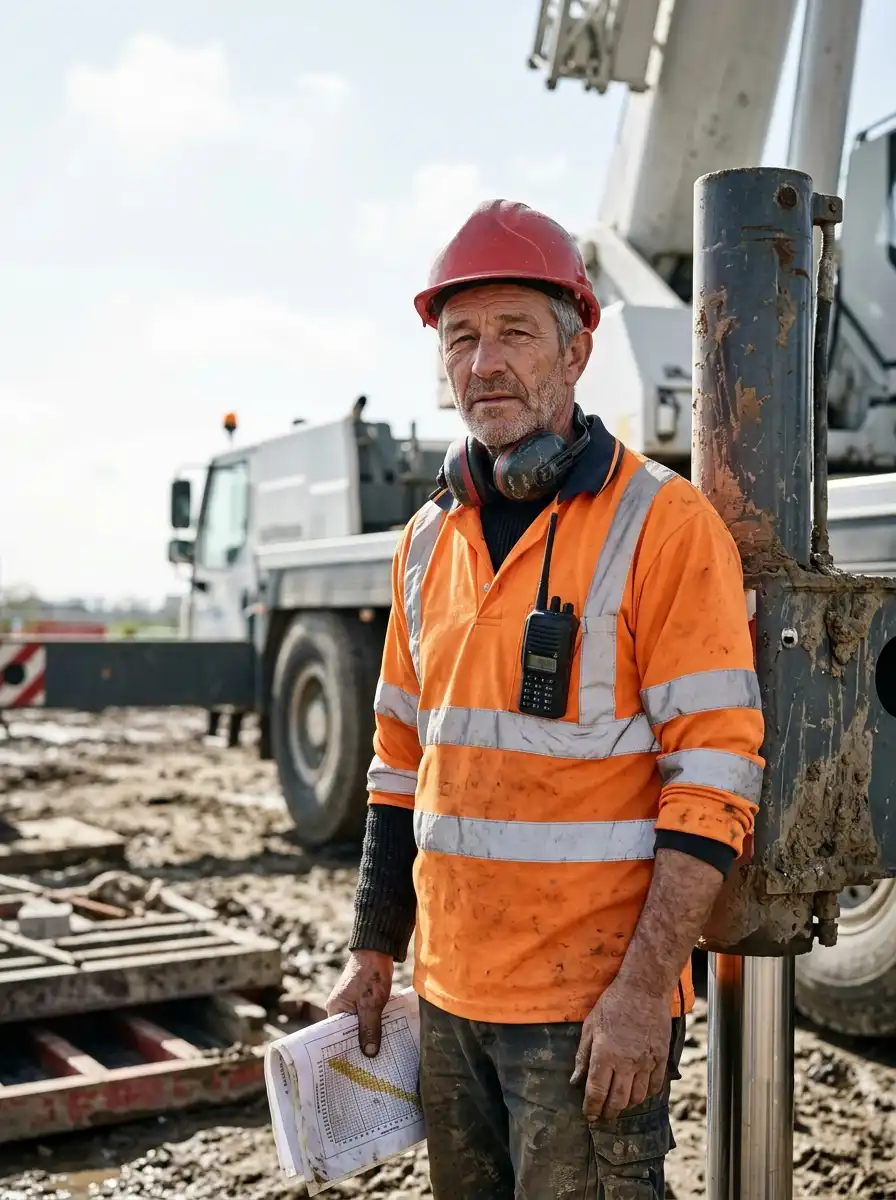
Section weights are calculated and checked against the load chart at working radius before the crew arrives.
That is the whole point. Where the stem cannot be trusted, the crane carries the climber and the wood.
Cribbing and mats spread the load so driveways, drainage, and septic fields take it without cracking.
Where the machine has to sit on the highway, we arrange the permit and the traffic control ourselves.
A crane day frequently replaces three rigging days. The hourly rate is higher; the invoice often is not.
Removals from sites with no drop zone at all — back gardens, tight streets, and trees leaning over the house.
When there is no safe drop zone and nothing sound to rig against. Dead or decayed stems, trees leaning hard over a roof, and anything in a back garden with no corridor out are the usual cases. If the tree is healthy and there is room to work, rigging is normally the cheaper answer and we will say so.
The day rate is higher, but the job is far shorter. A large removal that would take a climbing crew two or three days of rigging is often one crane day, which closes most of the gap. On genuinely difficult trees it frequently works out cheaper.
Usually on the street or the driveway, on outriggers spread across timber cribbing to protect the surface. We check the set-up point during the survey — reach matters more than proximity, so the machine often sits further away than people expect.
Outrigger loads are concentrated, which is exactly why we crib them. Cribbing and mats spread the weight across a much larger footprint so block paving, drainage runs, and septic fields carry it safely. Any ground protection needed is included in the quote, not added afterwards.
Send photos of the tree and the street it backs onto. We will tell you whether it needs a crane and what the lift day would cost.